Egg freezing, or oocyte cryopreservation, is a fertility preservation technique that involves:
Ovarian stimulation to produce multiple eggs.
Egg retrieval through a minimally invasive procedure.
Cryopreservation (freezing) using vitrification, a fast-freezing method that prevents ice crystal formation, preserving the eggs at extremely low temperatures.
Eggs remain frozen until the individual decides to use them for in vitro fertilization (IVF), at which point they are thawed, fertilized, and implanted into the uterus.
Genetic disorders, such as BRCA mutations, which may necessitate ovary removal.
B. Social or Elective Freezing
Some women choose to freeze their eggs for personal, career, or relationship reasons to extend their reproductive timeline. Studies show that women under 35 have higher success rates when using frozen eggs later.
Ideal candidates for elective freezing:
Women in their late 20s to early 30s who want to delay childbearing.
Those not ready to start a family but concerned about age-related fertility decline.
Individuals with low ovarian reserve (diagnosed through AMH and antral follicle count testing).
3. Step-by-Step Process of Egg Freezing
Step 1: Fertility Assessment & Hormonal Testing
Before egg freezing, women undergo a comprehensive fertility evaluation, including:
Anti-Müllerian Hormone (AMH) test – Measures ovarian reserve.
Antral Follicle Count (AFC) – Assesses the number of follicles available for stimulation.
The patient self-administers hormone injections (FSH, LH) to stimulate multiple eggs.
Regular ultrasound monitoring and blood tests track follicle growth.
A trigger shot (hCG or GnRH agonist) is given 36 hours before retrieval to mature eggs.
Step 3: Egg Retrieval (Oocyte Aspiration)
A doctor retrieves eggs using a minor surgical procedure called transvaginal ultrasound-guided aspiration.
The patient is under mild sedation, and a needle is inserted into the ovaries to extract mature eggs.
The procedure takes about 15–30 minutes.
Step 4: Vitrification (Fast Freezing of Eggs)
The retrieved eggs undergo vitrification, an ultra-rapid freezing method that prevents ice crystal formation.
Eggs are stored in liquid nitrogen at -196°C, maintaining their quality for years.
4. Success Rates of Egg Freezing
The success of egg freezing depends on age, number of frozen eggs, and the clinic’s laboratory techniques.
Age at Freezing
Chance of Live Birth per Thawed Egg
< 35 years
7–15% per egg
35–38 years
5–10% per egg
> 38 years
3–5% per egg
Key Findings:
Freezing 15–20 eggs before age 35 offers a 70% chance of at least one live birth.
Younger eggs have higher survival rates and better embryo development after thawing.
Success rates decline significantly after age 38 due to lower egg quality.
5. How Long Can Eggs Stay Frozen?
There is no known limit to how long eggs can remain frozen while maintaining viability.
The longest-reported case of a successful birth from a 14-year-old frozen egg demonstrates long-term storage safety.
6. Risks and Considerations
Medical Risks
Ovarian hyperstimulation syndrome (OHSS) – A rare reaction to fertility medications that causes bloating and discomfort.
Egg retrieval procedure risks – Infection or bleeding (rare).
Ethical and Emotional Considerations
Egg survival is not guaranteed – Not all eggs survive the freezing, thawing, and fertilization process.
Emotional impact – Some women feel pressure about using or discarding frozen eggs later in life.
7. Cost of Egg Freezing
Egg freezing costs vary by country and clinic, but the average price per cycle is:
Country
Cost per Cycle (USD)
USA
$6,000 – $15,000
UK
£3,500 – £5,000
Europe
€3,000 – €6,000
Australia
$5,000 – $8,000
Additional Costs:
Medications: $3,000–$5,000 per cycle.
Annual storage fees: $500–$1,000 per year.
IVF treatment later: $10,000–$15,000.
Some insurance providers and employers now cover egg freezing for medical reasons, and companies like Facebook and Apple offer it as an employee benefit.
8. Conclusion: Is Egg Freezing Right for You?
Egg freezing offers a valuable option for fertility preservation, but it is not a guarantee of future pregnancy. Women should carefully evaluate their age, ovarian reserve, and future reproductive goals before deciding. Consulting a fertility specialist is crucial to understand individual success probabilities.
Key Takeaways
✔ Best done before age 35 for higher success rates. ✔ 15–20 frozen eggs = ~70% chance of live birth. ✔ Costs range from $6,000–$15,000 per cycle, plus storage fees. ✔ New advances continue to improve egg freezing success.
Would you like a personalized fertility consultation? Talk to a fertility expert today!
At just 23 years old, Gisele already feels like she’s lived a lifetime with endometriosis. From the first sharp cramps in her teenage years to the exhausting rounds of painkillers, hormonal pills, and finally a laparoscopic surgery, she’s tried everything that modern medicine currently offers.
Her gynecologist, Dr. Pereira, helped her regain some control through continuous-use birth control pills and a well-performed surgery that reduced her pain dramatically. But now, as she begins to feel like herself again, Gisele is thinking ahead — five, ten years into the future.
She’s not ready to accept a life of hormonal side effects, invasive procedures, or the fear of pain returning. She’s still single, and the idea of preserving her fertility while managing a chronic illness feels overwhelming. She wants to know what lies beyond the conventional treatments.
And that’s where Dr. Pereira steps in once again — not with a prescription, but with knowledge. In this guide, he walks Gisele (and you) through the latest advances in endometriosis: what’s available now, what’s coming next, and what science is doing to reshape the future of care.
Endometriosis is a complex and often debilitating condition affecting millions of people worldwide. While there is no definitive cure, ongoing research has led to significant advancements in diagnosis, treatment, and management. From innovative medications to cutting-edge surgical techniques and potential future therapies, science is continuously evolving to improve the lives of those with endometriosis.
This article explores the latest breakthroughs in endometriosis research and treatment options.
1. Latest Advances in Endometriosis – Improved Diagnostic Tools: Moving Beyond Surgery
When Gisele first began experiencing symptoms, it took years before she even received a diagnosis. Sadly, her story is far from unique. One of the most frustrating aspects of endometriosis is the time it takes to be correctly identified. But thanks to the latest advances in endometriosis, that may be changing.
Moving Beyond Surgery
For decades, laparoscopy has been the gold standard for diagnosis. While effective, it’s also invasive, expensive, and often delayed. Researchers are now focusing on less invasive, faster diagnostic methods that could make a real difference in early detection.
Promising Non-Invasive Options
Blood and urine biomarkers: Scientists are investigating specific molecules—like microRNAs and inflammatory proteins—that might reveal the presence of endometriosis without the need for surgery.
Advanced imaging: High-resolution MRI, 3D ultrasound, and newer contrast techniques are giving doctors clearer views of endometrial lesions, especially in difficult-to-detect areas like the bowel or bladder.
Artificial Intelligence (AI): Emerging AI tools are being trained to analyze medical imaging and identify patterns linked to endometriosis with growing accuracy.
These technologies offer hope that the latest advances in endometriosis diagnosis could reduce the current average 7- to 9-year delay many patients face.
2.Latest Advances in Endometriosis – New Medications for Endometriosis Management
After her surgery, Gisele felt hopeful but cautious. While the continuous-use pills helped control her symptoms, she couldn’t help but wonder: What if there were treatments with fewer side effects? What if she didn’t have to rely on hormones forever? For patients like her, the latest advances in endometriosis offer new possibilities that go beyond what was available just a few years ago.
Targeted Hormonal Options with Fewer Side Effects
GnRH Antagonists: These next-generation medications work faster than older hormone therapies and are designed to minimize bone loss and menopause-like symptoms. They’re already offering relief to many women with fewer long-term risks.
Selective Progesterone Receptor Modulators (SPRMs): Unlike traditional therapies that shut down ovarian function entirely, SPRMs help regulate estrogen activity while preserving hormonal balance—a major advancement for those seeking long-term management without harsh side effects.
Exploring Non-Hormonal Therapies
Some patients, like Gisele, hope for options that don’t interfere with their natural hormones at all. That’s why researchers are turning to anti-inflammatory and immune-modulating drugs that target the root cause of endometriosis: chronic inflammation.
Non-Hormonal Anti-Inflammatory Drugs: Early studies are testing medications that block specific inflammatory pathways linked to endometriosis pain and lesion growth.
Immune Therapies: Scientists are also exploring treatments that modulate the immune system to reduce flare-ups and slow disease progression.
For those who have struggled with the limitations of hormonal therapy, these latest advances in endometriosis treatmentbring a sense of hope—one that Gisele clings to as she thinks about her future.
3. Latest Advances in Endometriosis – Advances in Endometriosis Surgery
Gisele still remembers the anxiety she felt before her laparoscopy. The idea of surgery was terrifying, but it also felt like her only hope after years of pain and frustration. Fortunately, her procedure with Dr. Pereira was a turning point—one that gave her months of relief. But like many others, she worries: What if the pain comes back? Would she need surgery again?
The good news is that the latest advances in endometriosis are making surgical options safer, more precise, and more effective than ever before.
Robotic-Assisted Laparoscopy
This cutting-edge technology allows surgeons to operate with incredible precision, even in hard-to-reach areas like the bowel, bladder, or pelvic wall. For patients with deep infiltrating endometriosis, robotic-assisted surgery minimizes trauma to surrounding tissues and offers shorter recovery times.
Excision Over Ablation: A Major Shift
Traditional surgeries often used ablation—burning off lesions—which carried a higher risk of recurrence. Now, excision surgery is considered the gold standard. This technique involves removing endometriosis tissue at the root, reducing the chance it will grow back and preserving important organs and fertility whenever possible.
Preventing Recurrence: Post-Surgical Innovations
Surgeons and researchers are also working on ways to keep symptoms from returning after surgery:
Anti-inflammatory medications are used post-op to lower immune responses that fuel lesion regrowth.
Combination therapies—pairing surgery with new drug treatments—are being studied to improve long-term outcomes.
Gisele finds comfort in knowing that even if she needs another procedure one day, the latest advances in endometriosis surgery will offer her a more personalized, effective, and less invasive experience than ever before.
4. Latest Advances in Endometriosis – The Role of Gut Health And Microbiome in Endometriosis
After years of trial and error, Gisele began to notice something curious—her endometriosis symptoms seemed to flare up after certain foods. Bloating, cramps, fatigue. It wasn’t just about hormones anymore. Could her gut be playing a role in her pain?
As science delves deeper into the latest advances in endometriosis, one emerging field is capturing attention: the connection between gut health and endometriosis progression.
Gut Bacteria and Inflammation
The gut is home to trillions of microorganisms that help regulate digestion, immunity, and inflammation. In people with endometriosis, researchers have found imbalances in gut bacteria—also known as dysbiosis—that may worsen chronic inflammation and pain.
Some studies suggest that certain strains of bacteria may trigger immune responses that allow endometriotic tissue to grow and persist outside the uterus.
Can Probiotics Help?
While research is still in early stages, scientists are exploring whether targeted probiotics could reduce inflammation and restore balance to the gut microbiome. Diet may also play a role, with anti-inflammatory foods potentially offering symptom relief when combined with medical treatment.
For Gisele, this new understanding feels empowering. Even though the science is evolving, it gives her hope that future therapies may not always involve pills or surgery—but perhaps something as simple and powerful as restoring balance within her own body.
The latest advances in endometriosis research are showing that healing may not come from one direction alone, but from understanding the body as a whole—gut and all.
5. Latest Advances in Endometriosis – Stem Cell & Gene Therapy: The Future of Endometriosis Treatment?
Gisele often wonders if science will ever offer a true cure. She’s young, hopeful, and dreaming of a future where endometriosis isn’t something she has to manage—but something she can leave behind entirely. For patients like her, the latest advances in endometriosis include research that sounds like science fiction, yet it’s becoming closer to reality every year.
Regeneration Through Stem Cell Therapy
One of the most promising developments involves stem cells—unique cells capable of transforming into different types of tissue. Researchers are studying whether stem cells can repair the damage caused by endometriosis, reduce inflammation, and even prevent lesions from returning after treatment.
Early trials in animal models have shown potential, especially in regenerating the lining of the uterus and surrounding pelvic tissues affected by chronic inflammation and scarring. While not yet available to patients, this therapy could one day offer a regenerative approach to healing.
Editing the Disease: Gene Therapy and CRISPR
Another futuristic—but very real—area of research focuses on gene editing, particularly with tools like CRISPR. Scientists have identified certain genes that may contribute to abnormal tissue growth and inflammatory responses in endometriosis. By editing these genes, researchers hope to “switch off” the mechanisms that fuel the disease.
Though still in early development, gene therapy holds the potential for a long-term solution without the hormonal side effects many women, including Gisele, are desperate to avoid.
As Dr. Pereira explains to her during a follow-up visit, these breakthroughs may not be part of today’s treatment menu—but they are paving the way for a future where endometriosis is no longer a life sentence. For Gisele, that future can’t come soon enough.
The latest advances in endometriosis research continue to break boundaries, opening doors to healing strategies that go far beyond anything medicine has offered before.
Latest Advances in Endometriosis – What’s Next? The Future of Endometriosis Care
Gisele sometimes finds herself lying awake at night, wondering what the next few years will look like. She’s only 23, and even though her pain is under control for now, she doesn’t want to live her entire life in fear of flare-ups, surgeries, or hormonal chaos. When she asks Dr. Pereira about the future, his answer is clear: while there’s still no cure, the direction of science is promising—and full of possibilities.
The latest advances in endometriosis aren’t just about what’s happening today, but about what could be possible tomorrow.
Better Pain Relief Without Hormones
New therapies are being developed that target nerve pain and inflammation without disrupting hormones. These could be life-changing for patients who can’t tolerate hormonal medications or want to preserve natural cycles.
Precision Medicine Tailored to Each Woman
In the near future, doctors may use a patient’s genetic profile and specific biomarkers to customize treatment plans. Instead of a “one-size-fits-all” approach, care would be as unique as each person’s experience with endometriosis.
Early, Accurate Diagnosis
Delays in diagnosis could soon become a thing of the past. With AI-powered imaging, blood-based biomarkers, and advanced screening tools, endometriosis could be detected within months of symptom onset—not years.
For Gisele, hearing this from Dr. Pereira brings unexpected comfort. Even if today’s options aren’t perfect, tomorrow’s might be. The latest advances in endometriosis research are moving fast—and so is hope.
Latest Advances in Endometriosis – Conclusion
Gisele left her last appointment with Dr. Pereira feeling something she hadn’t felt in years—relief, yes, but also clarity. She no longer saw her condition as a dead-end, but as a path she could walk with information, support, and realistic hope. Endometriosis might still be a part of her life, but it wouldn’t define her future.
From cutting-edge diagnostics to emerging treatments that don’t rely on hormones, from robotic surgery to research on the gut microbiome, the latest advances in endometriosis are opening doors that once seemed permanently closed.
If you, like Gisele, are living with endometriosis, know this: you are not alone, and the science is evolving with you in mind. What was once invisible is finally being understood. What was once dismissed is now being studied. And what once felt hopeless is, day by day, becoming manageable.
Stay informed. Ask questions. And don’t be afraid to explore new options. At vittafemme.com, we’re here to help you understand your choices and walk beside you as the future unfolds.
Endometriosis affects millions of people worldwide, yet misconceptions about the condition continue to spread misinformation. These myths often lead to delayed diagnosis, inadequate treatment, and unnecessary suffering. In this article, we debunk ten of the most common myths about endometriosis, providing evidence-based insights to help those affected and raise awareness about this complex disease.
EndometriosisMyths : 1. It is Just a Bad Period
Reality: Endometriosis is a chronic inflammatory disease, not just severe menstrual cramps. While painful periods (dysmenorrhea) are a common symptom, endometriosis can cause pain at any time of the month, including during ovulation, sex (dyspareunia), and even bowel movements.
Reality: While some women experience temporary symptom relief during pregnancy due to hormonal changes, endometriosis is not “cured” by pregnancy. For many, symptoms return postpartum, sometimes even worse than before.
EndometriosisMyths : 3. If You Have Endometriosis, You Will Be Infertile
Reality: While endometriosis can impact fertility, not all women with the condition are infertile. Many women with endometriosis conceive naturally or with assisted reproductive technologies like in vitro fertilization (IVF). Early diagnosis and treatment can improve fertility outcomes.
EndometriosisMyths : 4. Endometriosis Always Shows Up on Ultrasounds
Reality: Standard pelvic ultrasounds often fail to detect endometriosis unless large ovarian cysts (endometriomas) are present. A more detailed imaging technique, such as an MRI or an expert transvaginal ultrasound, is often required for accurate detection.
Reality: While menopause typically leads to a decrease in estrogen levels, which can suppress endometriosis growth, the disease does not always disappear. Some women continue to experience symptoms due to residual lesions, hormone therapy, or the presence of deep infiltrating endometriosis.
EndometriosisMyths : 6. Endometriosis Only Affects the Reproductive Organs
Reality: Endometriosis is a systemic disease that can affect multiple organs outside the reproductive system. It has been found in the bowel, bladder, lungs (thoracic endometriosis), and even the brain in rare cases.
EndometriosisMyths : 7. Endometriosis is Rare
Reality: Endometriosis affects an estimated 10% of women and individuals assigned female at birth worldwide, equating to roughly 190 million people. Despite its prevalence, awareness and research funding remain disproportionately low.
EndometriosisMyths : 8. Endometriosis Only Affects Older Women
Reality: Endometriosis can start as early as a girl’s first period (menarche) and affects adolescents as well as adults. Many women report symptoms in their teenage years, but diagnosis is often delayed due to misinformation about “normal” period pain.
EndometriosisMyths : 9. Birth Control Pills Cure Endometriosis
Reality: Hormonal treatments, including birth control pills, can help manage symptoms but do not cure endometriosis. These treatments work by suppressing ovulation and reducing inflammation but do not eliminate endometriotic lesions.
EndometriosisMyths : 10. Surgery is a Permanent Cure for Endometriosis
Reality: Laparoscopic surgery to remove endometriosis lesions can provide significant relief, but recurrence rates can be as high as 50% within five years, especially if all lesions are not completely excised. A multidisciplinary approach, including lifestyle modifications and medical therapy, is often needed for long-term management.
Conclusion
Endometriosis remains one of the most misunderstood medical conditions, contributing to delays in diagnosis and inadequate care. Dispelling these myths helps empower individuals with accurate information, leading to better advocacy, earlier intervention, and improved treatment options. If you suspect you have endometriosis, consult a specialist for proper evaluation and management.
Endometriosis and Fertility: 1 Silent Journey, 1 Hopeful Answer
By Dr. Pereira
I still remember Shirley’s eyes—bright, curious, but carrying the quiet weight of a question no one had yet answered. She had been trying to get pregnant for three years. No pain, no heavy periods, no obvious signs. Just absence—of conception, of answers, of direction.
Like many women, she never suspected endometriosis. After all, isn’t it a disease of pain? Of doubled-over cramps, missed workdays, pain during sex? But Shirley had none of that. What she did have was infertility—relentless, unexplained, and heartbreaking.
Her case changed the way I talk about endometriosis and fertility with all my patients.
The Hidden Link Between Endometriosis and Fertility
Endometriosis and fertility are deeply connected, though not always in obvious ways. Endometriosis is often thought of as a painful menstrual disorder, but it can also exist silently, without symptoms, and still impact a woman’s ability to conceive.
In Shirley’s case, it was the subtle clues that pointed me in the right direction.
During her pelvic exam, I noted that her uterus was fixed in a retroverted position—tilted backward and seemingly stuck. It wasn’t a normal finding, and it raised my suspicion of something more complex going on.
I ordered a transvaginal ultrasound and an MRI.
The images revealed the truth.
Shirley had deep endometriosis involving both ovaries—large endometriomas, adhesions, and inflammation. It had silently wrapped itself around her reproductive organs, damaging the terrain without ever raising alarm bells. She had what we call “silent endometriosis.”
How Endometriosis Affects Fertility
1. Inflammation Creates a Hostile Environment
Endometriosis leads to chronic inflammation. This doesn’t just cause pain—it also changes the environment of the pelvis. The inflammatory fluid can damage eggs, sperm, and even embryos trying to implant.
In Shirley’s case, the inflammation wasn’t felt—but it was visible on her scans. Her ovaries were surrounded by dense tissue. The environment meant to nurture life had become a barrier.
2. Hormonal Imbalances Disrupt Ovulation
Women with endometriosis often have elevated estrogen and resistance to progesterone. This hormonal imbalance can disrupt ovulation and make the uterus less responsive to implantation.
Though Shirley’s cycles were regular, hormonal resistance may have made it harder for her body to support early pregnancy.
3. Scar Tissue and Adhesions Block Natural Conception
One of the most direct effects of endometriosis and fertility issues is physical. Scar tissue (adhesions) can block fallopian tubes or twist ovaries out of position. Endometriomas—chocolate cysts—can also damage healthy ovarian tissue and reduce egg reserve.
Shirley had large endometriomas on both ovaries. Her ovarian reserve was lower than expected for her age. Her fallopian tubes were distorted. She wasn’t ovulating efficiently, and even if she was, the egg and sperm may never have found each other.
4. Egg Quality Can Be Affected
Endometriosis increases oxidative stress in the pelvic environment, which can damage eggs. Even if ovulation occurs, the quality of those eggs might be compromised, reducing the chances of fertilization or early embryo development.
Diagnosis: The Moment That Changed Everything
What made the difference for Shirley was timing—but also a careful exam.
During the pelvic examination, I immediately noticed something abnormal. Her uterus wasn’t mobile—it was tilted backward, firmly adhered to deep pelvic structures. This wasn’t just a variation of normal. It was a red flag.
Right there in my office, I performed a transvaginal ultrasound.
There were no more doubts. Both ovaries were affected by endometriomas—large, dark cysts typical of advanced endometriosis. The ovaries were not free; they were stuck to the back of the uterus and also to loops of the bowel. The anatomy was distorted. Shirley’s case wasn’t just endometriosis—it was deep endometriosis.
To confirm the extent, I ordered an MRI.
The results matched exactly what we saw on ultrasound. The scan showed deep endometriosis in both uterosacral ligaments and also revealed a superficial lesion involving the bowel. Her uterus was completely fixed in retroversion, explaining the abnormal findings on exam.
For the first time, she had a name for the years of uncertainty: endometriosis and fertility were now connected in her story.
Treatment Options and Fertility Planning
After confirming the diagnosis, my next step was to talk with Shirley about what this meant for her chances of becoming a mother.
She had been trying to conceive for over three years without success. Now we knew why.
The deep endometriosis involving both ovaries, the uterus, and even a segment of the bowel had silently affected her reproductive anatomy. The egg reserve might still be intact, but access was the issue. The inflammation, scar tissue, and endometriomas created both mechanical and biological barriers to conception.
I explained to her that in cases like this, natural pregnancy is still possible — but much less likely.
Given her age and how long she had already been trying, I recommended we act quickly. In-vitro fertilization (IVF) offered the highest success rate in her situation.
IVF would allow us to bypass the blocked fallopian tubes, retrieve eggs directly from the ovaries, fertilize them in the lab, and transfer a healthy embryo into her uterus — assuming we could prepare her uterine lining and control the disease beforehand.
But first, we needed to consider pre-IVF preparation:
Suppression therapy to reduce inflammation and improve implantation rates.
Careful monitoring of her ovarian reserve, especially due to the damage caused by the endometriomas.
A surgical consultation, not for aggressive removal, but for gentle separation of adhesions if they interfered with egg retrieval or embryo transfer.
Shirley was quiet for a moment.
Then she asked the question I hear so often: “Will I ever be a mother?”
And the truth is — yes. Endometriosis and fertility may be linked by obstacles, but they are not mutually exclusive. With the right strategy, the right timing, and the right support, motherhood is still within reach.
Shirley left my office that day with a clear plan and something she hadn’t felt in years — hope.
A Path Forward: Hope, Choices, and Empowerment
n the days that followed, Shirley began her treatment. We started hormonal therapy to calm the disease activity and prepare her body for IVF. But more importantly, we gave her back control — something endometriosis had slowly taken from her.
She asked if pregnancy could still happen naturally.
In some women, it can.
If endometriosis is mild, if the fallopian tubes are open, if ovulation is regular, natural conception is absolutely possible. Many women conceive without needing IVF. But in Shirley’s case, deep infiltrating lesions, bilateral endometriomas, and three years of unsuccessful attempts all pointed toward a lower probability.
That’s why timing matters. Age plays a crucial role. After 35, fertility declines more sharply. And every year of delay due to undiagnosed endometriosis reduces the ovarian reserve, especially when the ovaries are affected.
Endometriosis and Fertility – What Can Be Done?
Shirley’s story is not unique. Many women face the heartbreak of infertility without answers.
But there are multiple treatment paths available, including:
Treatment Options for Endometriosis And Infertility
If you’re struggling to get pregnant, several options can help:
1. Medications to Reduce Inflammation and Balance Hormones
Birth control pills, progestins, or hormone treatments can help control endometriosis symptoms.
However, these treatments don’t improve fertility—they’re used more for symptom relief.
2. Surgery to Remove Endometriosis Lesions and Scar Tissue
Laparoscopic surgery can remove cysts, scar tissue, and other blockages that may be interfering with pregnancy.
Many women see an increase in fertility after surgery, especially if their fallopian tubes are not affected.
3. Fertility Treatments (IUI and IVF)
If natural conception isn’t happening, doctors may recommend:
Intrauterine Insemination (IUI): A procedure where sperm is placed directly into the uterus to improve the chances of fertilization.
In Vitro Fertilization (IVF): A process where eggs are taken from the ovaries, fertilized with sperm in a lab, and then placed back into the uterus.
IVF can be especially helpful for women with moderate to severe endometriosis, as it bypasses some of the barriers caused by scarring and inflammation.
Ways to Improve Fertility with Endometriosis
Even if you’re not undergoing treatment, there are steps you can take to support your fertility naturally, thought they are not a treatment:
However, excessive exercise can disrupt ovulation, so it’s important to find balance.
Consider Supplements
Vitamin D, vitamin C, and antioxidants can help reduce inflammation and support reproductive health.
Talk to your doctor before starting any new supplements.
Each plan must be personalized. Endometriosis and fertility are deeply interconnected — but no two cases are alike.
Endometriosis And Fertility –When to See a Doctor
If you’ve been trying to conceive for over a year (or six months if over 35), it’s time to speak to a specialist. And if you’ve ever experienced painful periods, bloating, pelvic pressure, or fatigue — don’t wait.
In Shirley’s case, she had none of the classic signs. No menstrual pain. No sexual pain. Just the silent erosion of her reproductive capacity.
That’s what makes endometriosis so dangerous: sometimes, it hides in plain sight.
If I had waited longer, if I hadn’t trusted the signs her body was showing me — a fixed uterus, immobile ovaries, a backward tilt during the pelvic exam — we might have missed our window.
But we didn’t.
Endometriosis And Fertility -The Outcome: A New Beginning
Months later, Shirley began her IVF cycle.
We retrieved several eggs — fewer than ideal, but enough. One beautiful embryo was transferred successfully. The wait was agonizing.
Then the call came.
She was pregnant.
It wasn’t just a medical victory. It was a triumph of timing, listening, and fighting for her chance. And when I saw her first ultrasound, tears came to her eyes — and mine too.
Not every journey ends this way. But every woman deserves the opportunity, the answers, and the compassion to find her path.
Endometriosis and fertility do not have to mean despair. With the right care, motherhood is still possible.
Endometriosis And Fertility – Conclusion
Endometriosis doesn’t mean infertility—but it can make conception more challenging. The good news is that many women with endometriosis go on to have healthy pregnancies, whether naturally or with the help of fertility treatments.
Understanding how endometriosis affects fertility, available treatment options, and lifestyle changes can help you take control of your reproductive health and increase your chances of conceiving.
If you’re living with endometriosis and struggling to conceive, you’re not alone — and it’s not your fault.
Early evaluation, individualized treatment, and emotional support can change everything.
Don’t accept pain or infertility as your destiny. Talk to a doctor. Ask questions. Get the care you deserve.
At vittafemme.com, we’re here to guide you every step of the way.
Understanding Endometriosis: A Journey Through Maria’s Pain
By Dr Pereira
“Doctor, I’ve tried everything. Painkillers, birth control, even changing my diet. But nothing helps. Am I going crazy?”
That was the first thing Maria said to me when she entered my office. Her eyes were tired, but more than that, they held fear. At 28, Maria was a bright, strong woman—until her pain started to take everything from her.
As a gynecologist, I’ve met hundreds of women like Maria. Women who’ve been told it’s normal to suffer during periods. That pain is part of being a woman. That they should stop complaining.
But when I examined Maria and saw her flinch in pain during the pelvic exam, I knew what we were dealing with. Her uterus was retroverted and fixed, and she had tenderness deep in the pelvis. I performed a transvaginal ultrasound in my office that same moment.
And there they were: bilateral endometriomas, both ovaries affected, stuck to the uterus and bowel. It was deep infiltrating endometriosis—and Maria had many classic symptoms: painful periods, pain during sex, and infertility.
Understanding Endometriosis: What Is it?
Understanding endometriosis begins with understanding the body. Endometriosis is a condition where tissue similar to the endometrial lining of the uterus grows outside the uterus. It most often affects the ovaries, fallopian tubes, pelvic lining, and even the bowel. In rare cases, it can reach distant organs like the lungs.
This misplaced tissue acts like uterine lining—it thickens, breaks down, and bleeds during each menstrual cycle. But unlike regular endometrial tissue, it has no way to leave the body. The result? Inflammation, pain, and scar tissue.
Some women experience extreme pain. Others, like Maria, also suffer from infertility. That’s what makes understanding endometriosis so complex—and so important.
Understanding Endometriosis: Common Symptoms
In my practice, I’ve seen symptoms vary dramatically. Here are the most common ones:
Chronic Pelvic Pain – Pain that persists beyond menstruation.
Dysmenorrhea – Menstrual cramps so severe that even strong painkillers don’t help. Menstrual cramps that are progressive, lasting through the entire period and often before or after menses. These cramps worsen over the years.
Dyspareunia – Pain during or after sex. Sometimes, the pain during intercourse is so intense that a woman has to ask her partner to stop. Sadly, many partners struggle to understand this, leading to frustration and emotional distance.
Gastrointestinal Issues – Bloating, nausea, constipation, or diarrhea, especially during periods. Some patients experience sharp, stabbing pain during bowel movements, as if a knife were passing through the rectum. In severe cases, this can lead to partial or complete intestinal obstruction.
Urinary Problems – Painful or frequent urination, sometimes with blood.
Infertility – Up to half of women with infertility have endometriosis.
Fatigue, Anxiety, and Depression – Living with daily pain takes a toll on both body and mind.
Maria had all three: severe pain, sexual discomfort, and infertility. She had been trying to conceive for three years with no success.
Understanding Endometriosis: What Causes it?
There’s no single cause, but several theories help us in understanding endometriosis:
Retrograde Menstruation – When menstrual blood flows backward into the pelvis.
Cell Transformation – Some pelvic cells may turn into endometrial-like cells.
Immune Dysfunction – A weak immune system may fail to clear the misplaced tissue.
Genetics – Family history increases your risk.
Environmental Factors – Exposure to toxins and chronic inflammation may play a role.
Understanding Endometriosis: How Is it Diagnosed?
Maria’s diagnosis came from a physical exam and immediate ultrasound. But for many women, the process takes years.
History & Symptom Review – We listen. And believe.
Pelvic Exam – Looking for nodules, masses, or tenderness.
MRI – Shows deep lesions and helps surgical planning.
Laparoscopy – The gold standard. A minimally invasive surgery that confirms diagnosis and allows for treatment.
In Maria’s case, the MRI confirmed what we suspected: endometriomas, bowel adhesions, distorted tubes, and superficial lesions on the intestine.
Understanding Endometriosis: Treatment Plan – A Two-Step Approach
Given the level of pain, infertility, and anatomical distortion, we opted for a proactive approach:
Egg Retrieval and Freezing – Why did we do it? Because during surgery, we would perform excision of ovarian endometriomas, ovarian lesions, and adhesions that could compromise Maria’s ovarian reserve. So we collected her eggs before surgery to preserve her fertility.
Laparoscopic Surgery – A full excision surgery followed:
Bilateral endometriomas removed
Deep infiltrating lesions excised
Resection of a portion of the rectosigmoid colon
Adhesiolysis and restoration of pelvic anatomy
Salpingectomy (both tubes were hydrosalpinges and nonfunctional)
Understanding Endometriosis: How Does It Affect Fertility?
Maria’s story highlights what many women face: the silent effect of endometriosis on fertility.
Inflammation alters the uterine environment, making implantation difficult.
Hormonal Resistance, especially to progesterone, disrupts ovulation and endometrial receptivity.
Scar Tissue can block fallopian tubes or surround the ovaries.
Ovarian Endometriomas may reduce egg quality.
Despite these challenges, freezing eggs before surgery protected her chances.
Can You Get Pregnant Naturally with Endometriosis?
Yes. But it depends on:
Severity of the disease.
Age (fertility declines after 35).
Condition of the fallopian tubes.
Duration of trying (more than 6 months after 35, or 12 months before 35, warrants evaluation).
For Maria, with tubal damage and bowel endometriosis, IVF became the next step.
Treatment Options for Endometriosis-Related Infertility
For women like Maria, here’s what we consider:
Surgery – Laparoscopic excision improves pain and fertility.
IVF (In Vitro Fertilization) – Especially when tubes are damaged or ovaries are affected.
Egg Freezing – Before surgery or age-related decline.
Hormonal Medications – For symptom control, not fertility improvement.
Supporting Fertility Naturally
Some changes may help support fertility (though they’re not a cure):
If you suspect endometriosis or are trying to conceive, see a specialist if:
You’ve tried for over 6-12 months (depending on age).
You have severe menstrual pain or pain during sex.
You’ve had pelvic surgeries.
You suspect cysts or blocked tubes.
Understanding Endometriosis: Conclusion
Maria is still on her journey. After recovering from surgery and completing her fertility preservation, she is now preparing for IVF—with hope in her heart and a body that is finally healing.
Understanding endometriosis isn’t just about science. It’s about listening to women. It’s about shortening the years of silence, misdiagnosis, and suffering. It’s about empowering patients to take control.
If you’re reading this and wondering whether your symptoms are being taken seriously, don’t stop until you find answers. Understanding endometriosis is real. And you deserve to be heard.
Help us spread this message. Share this post. Visit Vittafemme.com. Let’s make understanding endometriosis accessible to every woman—together.
INTRODUCTION: What Happens During the First Trimester Pregnancy
The first trimester pregnancy is a time of profound change—both seen and unseen. For many women, it begins with a wave of unexpected symptoms: nausea, breast tenderness, extreme fatigue, or just a strange sense that “something’s different.” These subtle (and sometimes not-so-subtle) signs are your body’s way of announcing a monumental transformation.
Behind the scenes, a surge of pregnancy hormones—especially human chorionic gonadotropin (hCG) and progesterone—kicks into action. These hormones help maintain the uterine lining, prevent menstruation, and support the growing embryo. At the same time, your metabolism, circulation, and immune system begin to shift in response to the baby you may not even realize is there yet.
The first trimester pregnancy also carries emotional weight. You may feel joy, fear, confusion, or all of the above. But from the medical perspective, this is the trimester where the foundations of life are laid: the baby’s brain, spinal cord, heart, and organs begin forming within mere days of implantation.
Understanding these weekly changes can make the experience feel less mysterious and far more empowering. Let’s walk through this journey, week by week, starting with Week 4—when most pregnancies begin to show signs.
First Trimester Pregnancy: 4 Weeks
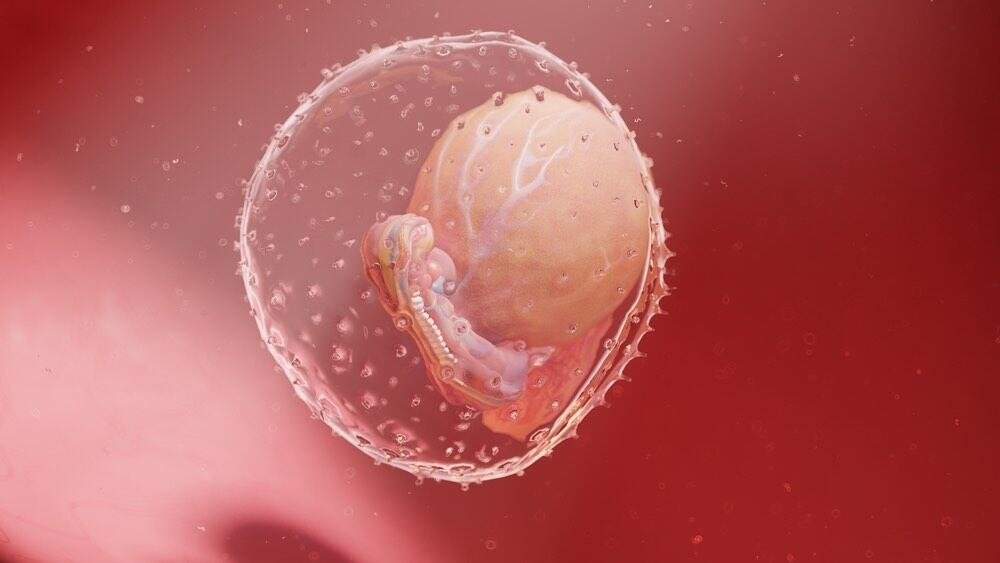
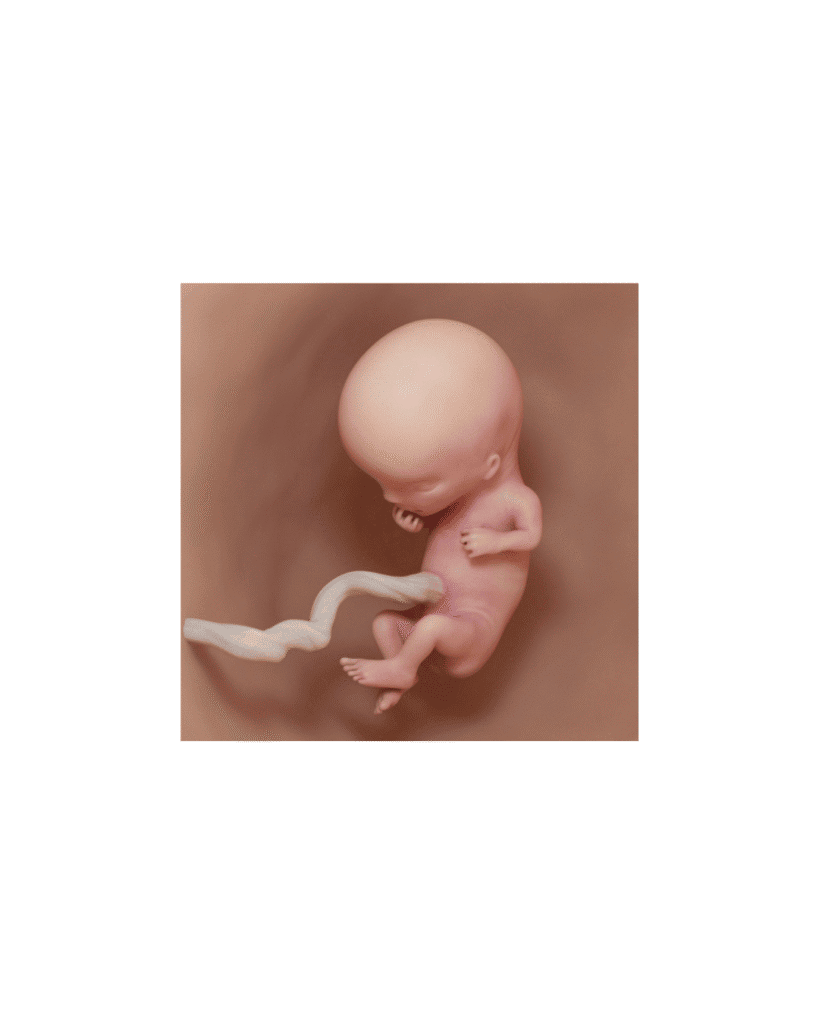
3d rendered illustration of a human embryo – week 4
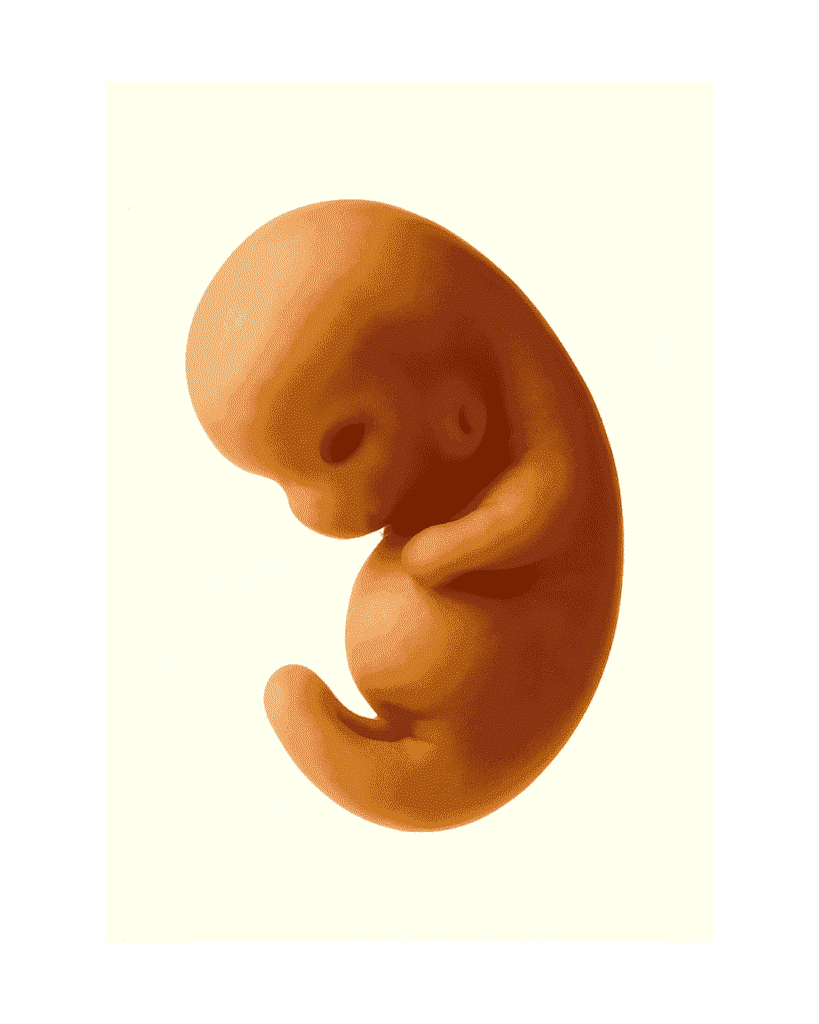
At 4 weeks pregnant, the fertilized egg has implanted into the uterine lining. This tiny cluster of cells is now called a blastocyst, and it’s about the size of a poppy seed.
In this early stage of first trimester pregnancy, the embryo starts to form two major structures:
The embryoblast, which will become the baby
The trophoblast, which will later develop into the placenta
You might start experiencing mild cramping, spotting (known as implantation bleeding), or no symptoms at all. Some women notice a missed period and take their first pregnancy test around this time. If positive, it’s usually because the hormone hCG has started to rise in your bloodstream and urine.
Internally, the foundations of your baby’s brain, heart, and spinal cord are beginning to take shape. It’s truly the beginning of everything.
First Trimester Pregnancy: 5 Weeks
At 5 weeks, your pregnancy becomes more biologically active—and so do your symptoms. You may now experience stronger fatigue, tender or swollen breasts, mood swings, and possibly the first waves of morning sickness. For many, this is when pregnancy starts to feel “real.”
The embryo is now about the size of a sesame seed, and it’s beginning to grow rapidly. Major organ systems are starting to form, and a tiny neural tube is developing—this will eventually become your baby’s brain and spinal cord. It’s why folic acid is so crucial during this stage.
A primitive heart tube also begins to beat, although it’s not yet fully formed. If you were to see an ultrasound now, the embryo would still look like a small curved shape—but the foundations of life are well underway.
First Trimester Pregnancy: 6 Weeks
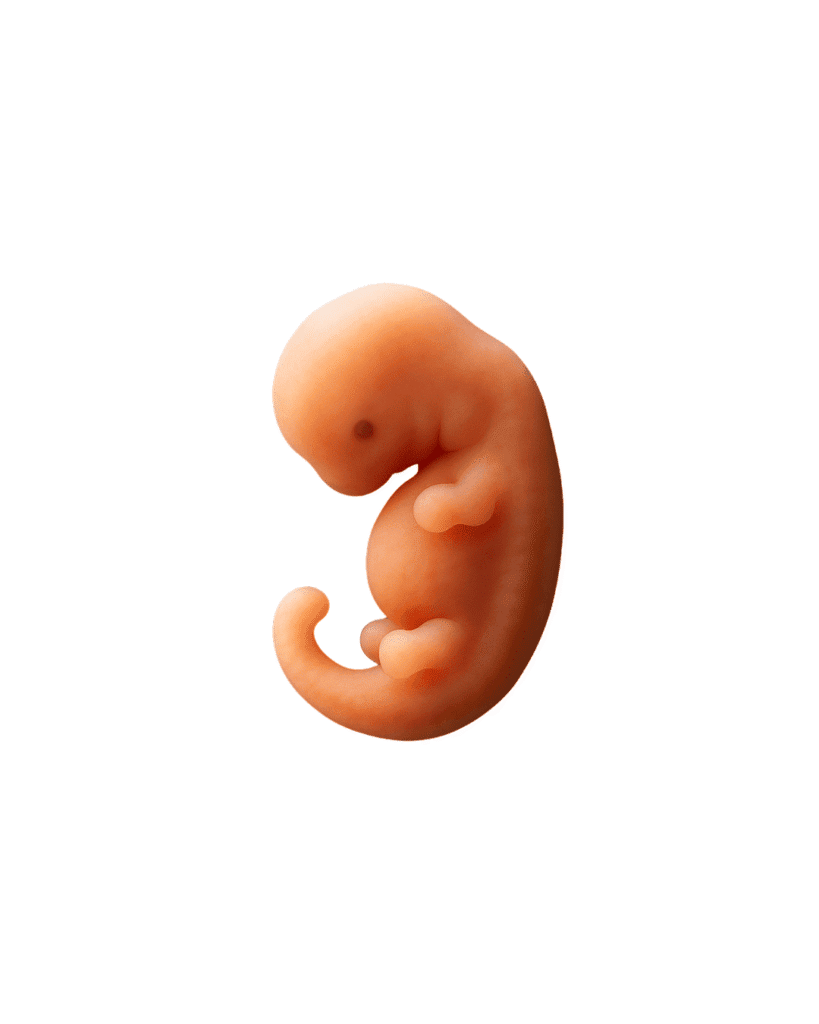
At 6 weeks, your baby has doubled in size and now measures around 5 to 6 mm—about the size of a lentil. One of the most exciting developments this week is the appearance of a tiny, flickering heartbeat, which might be detectable via a transvaginal ultrasound.
The embryo’s shape is becoming more defined, with small bumps that will form the arms and legs. Inside, the brain and spinal cord are growing rapidly. Facial features are starting to form too, including early eye pits and nostrils.
For you, pregnancy hormones are peaking, especially hCG and progesterone. You might notice increased nausea, food aversions, and emotional ups and downs. Spotting can still be normal at this stage—but if it’s heavy or painful, it’s always a good idea to contact your provider.
First Trimester Pregnancy: 7 Weeks
By 7 weeks, the embryo has grown to the size of a blueberry—about 10 mm in length. The most exciting development this week is that your baby now has a beating heart with a more regular rhythm, and the basic structure of the brain is becoming more complex.
Tiny buds that will become arms and legs are starting to lengthen and flatten. Small black dots mark the places where the eyes and nostrils are forming, and ears are beginning to take shape on the sides of the head.
As for you, symptoms may intensify. Nausea, vomiting, and extreme fatigue are common due to the high levels of hCG. You may also notice food aversions, extra saliva, and even a heightened sense of smell.
This week marks a critical period in fetal development, as organs are beginning to specialize and cells are dividing rapidly. This is why avoiding alcohol, smoking, and certain medications is more important than ever.
First Trimester Pregnancy: 8 Weeks
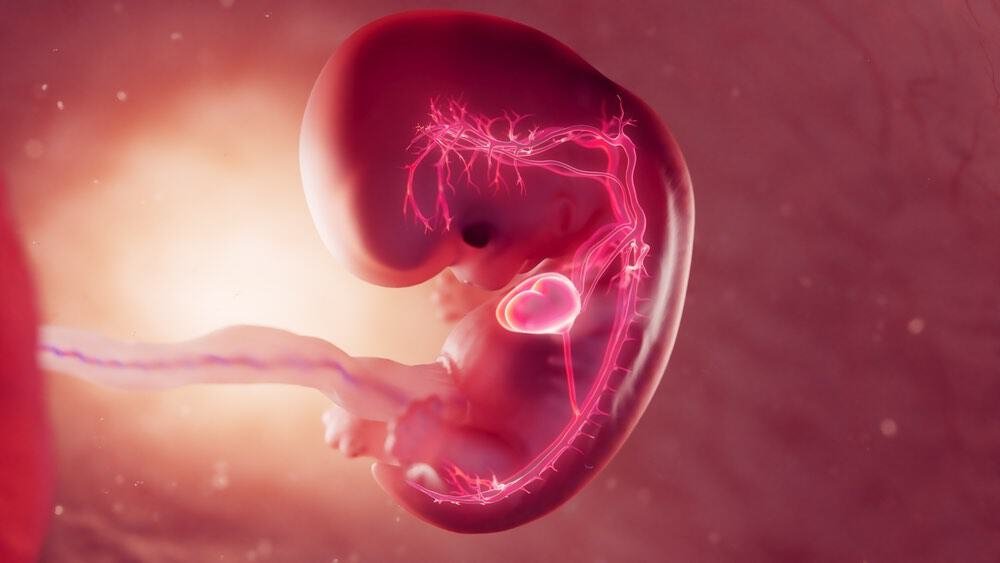
3d rendered medical illustration of cardiovascular system of 8 week old embryo
At 8 weeks pregnant, your baby is now the size of a raspberry, measuring around 14–16 mm in length. The embryo now officially becomes a fetus—a word that means “offspring” in Latin.
This week, fingers and toes begin to form from the paddle-like hand and foot buds. The eyelids, though fused shut, are also developing, and facial features become more distinct. Internal organs such as the liver, kidneys, and lungs are starting to organize into place, and muscles begin to form as well.
You may feel bloated or notice your waistline expanding slightly, even if your uterus is still deep in the pelvis. Hormonal changes can also bring mood swings, frequent urination, and acne.
This is a week of major cellular activity for your baby—and a week when many women begin their first prenatal appointment. Seeing the heartbeat on ultrasound can be a deeply emotional and affirming moment.
First Trimester Pregnancy: 9 Weeks
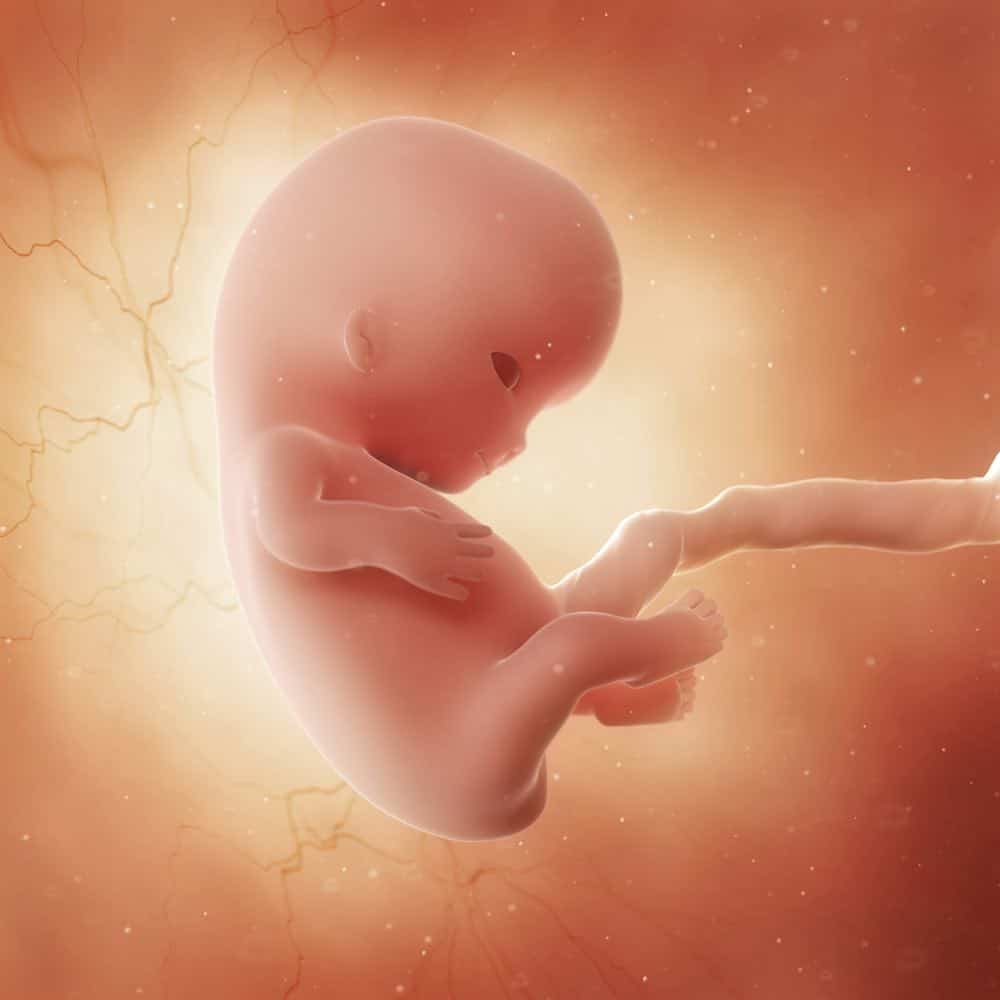
3d rendered medically accurate illustration of a fetus in week 9
At 9 weeks, your baby is about the size of a cherry, measuring around 2.3–2.5 cm (1 inch). This stage marks a transition from an embryo to a fetus, and development continues at an astonishing pace.
The baby’s arms and legs are growing longer and developing elbows and knees. Tiny fingers and toes are becoming more defined—no longer just webbed paddles. Facial features are taking shape too, with a more recognizable profile and the beginnings of ears, eyes, and a nose.
Internally, the heart has developed four chambers and beats strongly. Organs like the pancreas, gallbladder, and reproductive structures are forming, though the baby’s sex won’t be distinguishable on ultrasound just yet.
For you, hormonal surges may still cause intense fatigue, nausea, and frequent urination. Your uterus is now about the size of a grapefruit. You may also notice more visible veins, due to increased blood volume.
First Trimester Pregnancy: 10 Weeks
At 10 weeks, your baby is now the size of a kumquat or a small prune, measuring about 3–4 cm. All the major body structures have formed, and the fetal stage is well underway.
The most exciting part of this week in first trimester pregnancy is that your baby begins to make small, jerky movements—although you won’t feel them just yet. Elbows and knees bend, and bones start to harden. The outer ears take their final shape, and tiny tooth buds are forming under the gums.
Inside, vital organs like the liver, kidneys, intestines, and brain are rapidly maturing. Fingernails and toenails are beginning to grow, and the spine is more visible on ultrasound.
As for your symptoms, nausea may peak around this time, but many women start to feel slightly better as they approach the second trimester. Your mood may stabilize, and early pregnancy bloating could start to ease.
First Trimester Pregnancy: 11 Weeks
At 11 weeks, your baby is about the size of a fig—around 4–5 cm long and weighing roughly 7 grams. This week marks the end of the most vulnerable phase of development. While still very small, the fetus now has fingers, toes, ears, and even tiny fingernails.
The head still makes up nearly half of the baby’s body, but the neck is elongating, allowing more movement. The bones are starting to harden, and the baby’s body is gradually straightening out from the previously curved position.
Internally, the diaphragm is forming, setting the stage for future breathing. The kidneys are producing small amounts of urine, and the intestines, which were developing outside the body, begin to migrate into the abdominal cavity.
You might notice that your waistline is expanding, and some early pregnancy symptoms may begin to ease. Many women feel a sense of relief and even energy returning as they approach the second trimester.
First Trimester Pregnancy: 12 Weeks
At 12 weeks pregnant, your baby is about the size of a lime, measuring 5–6 cm in length and weighing 14–18 grams. All of the major organs and body systems are now present—just tiny and still developing.
The reflexes begin this week! Your baby may start to move when touched, although you won’t feel it yet. Fingers can curl, and the baby may make tiny mouth movements. The brain continues to grow rapidly, and nerve connections are forming quickly.
The face now looks much more human, with well-formed eyelids, nose, and lips. External genitalia are developing and may be distinguishable on ultrasound soon.
For you, this week marks the end of the first trimester pregnancy. Many women feel less nauseated and more energetic, though some symptoms—like frequent urination and breast tenderness—may persist. A growing number of parents choose this time to share the news of their pregnancy with friends and family.
First Trimester Pregnancy: Conclusion
The first trimester of pregnancy is nothing short of miraculous. In just 12 weeks, a single fertilized cell transforms into a fetus with a beating heart, a developing brain, limbs, and facial features. For many expectant parents, this period is filled with wonder, anxiety, symptoms, and immense change.
From a medical perspective, the first trimester pregnancy is also the most critical window for fetal development—a time when nutrition, rest, and avoiding harmful substances have lasting impact. It’s also when most pregnancy losses tend to occur, which can make this stage emotionally intense.
Understanding what’s happening week by week helps reduce anxiety and empowers pregnant women to make informed choices. As the second trimester approaches, energy often returns, nausea tends to fade, and the joys of pregnancy begin to shine more brightly.
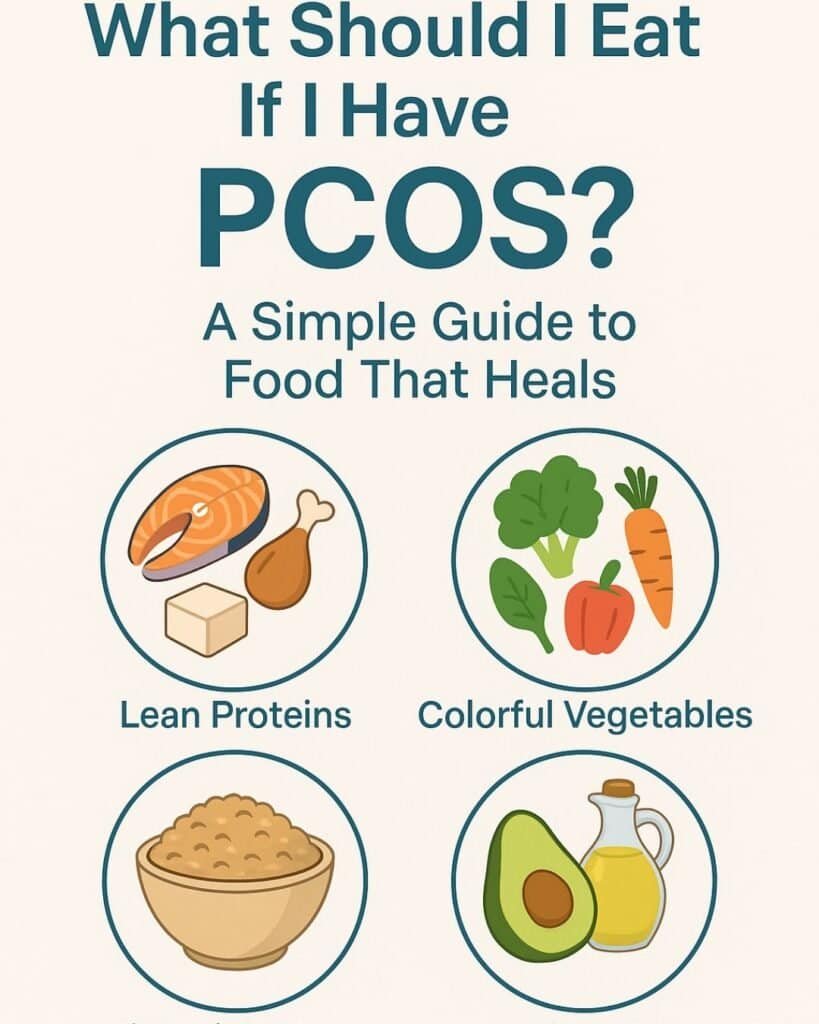
Imagine waking up every day wondering why your body doesn’t seem to listen to you. The stubborn weight gain, the painful acne, the irregular periods—it’s not “just in your head.” For millions of women living with Polycystic Ovary Syndrome (PCOS), this daily battle is real. But here’s the good news: food can be your strongest ally.
What Is PCOS and Why Does Diet Matter?
PCOS is a hormonal condition that affects up to 1 in 10 women. It’s linked to high levels of insulin (a hormone that controls blood sugar), inflammation, and imbalances in reproductive hormones. Many women with PCOS struggle with weight gain, facial hair, infertility, or mood swings.
Your diet can help balance hormones, lower insulin levels, reduce inflammation, and ease symptoms. It’s not about perfection—it’s about small choices that add up.
Top Foods to Help Manage PCOS
Lean Proteins:
Think chicken, fish, turkey, tofu. Protein helps keep you full and stabilizes blood sugar.
High-Fiber Carbs:
Whole grains like oats, quinoa, and brown rice slow down sugar spikes, preventing energy crashes.
Colorful Vegetables:
Broccoli, spinach, kale, and bell peppers are loaded with antioxidants and fiber to fight inflammation.
Healthy Fats:
Avocados, olive oil, nuts, and seeds help balance hormones and improve cholesterol.
Low-Glycemic Fruits:
Berries, apples, pears—these won’t spike your blood sugar as quickly as tropical fruits.
PCOS: Foods to Limit (But Not Fear)
You don’t have to cut out everything you love. But reducing sugary drinks, white bread, and processed snacks can make a big difference. Instead of thinking “I can’t have this,” ask, “What’s a better choice for me today?”
Can Supplements Help Women Struggling with PCCOS?
Studies show that inositol may improve insulin sensitivity and restore ovulation. Some doctors also recommend vitamin D if your levels are low, since it’s often deficient in women with PCOS. Always talk to your doctor before starting supplements.
PCOS Is Not Just About Weight
While many are told to lose weight, not every woman with PCOS is overweight. And weight loss isn’t the only marker of success. Even small improvements in diet and activity can lower inflammation and improve fertility.
“I started focusing less on the scale and more on how I felt. Within months, my periods returned and my skin started clearing up.”
Emotional Impact in PCOS Matters Too
PCOS isn’t just a physical condition—it affects confidence, relationships, and mental health. Don’t be afraid to ask for help if you feel overwhelmed. Nutrition, therapy, movement, and medical care all play a role.
PCOS: Your Journey, Your Pace
There’s no perfect PCOS diet. Some women do well with Mediterranean-style eating; others with low-carb or plant-based approaches. Listen to your body, stay patient, and celebrate every small win.
Want more support? Visit vittafemme.com for resources, real stories, and expert tips.
References :
Shahmoradi, L. et al. Nutritional management recommendation systems in polycystic ovary syndrome: a systematic review. BMC Women’s Health, 2024; 24(234):1-26. DOI:
https://doi.org/10.1186/s12905-024-03074-3.
Almhmoud, H. et al. Polycystic ovary syndrome and its multidimensional impacts on women’s mental health: a narrative review. Medicine (Baltimore), 2024; 103(25):e38647. DOI:
http://dx.doi.org/10.1097/MD.0000000000038647.
Fitz, V. et al. Inositol for Polycystic Ovary Syndrome: A systematic review and meta-analysis. J Clin Endocrinol Metab, 2024; 109(6):1630-1655. DOI:
https://doi.org/10.1210/clinem/dgad762.
Katyal, G. et al. Systematic review of the roles of inositol and vitamin D in improving fertility among patients with polycystic ovary syndrome. Clin Exp Reprod Med, 2024; 51(3):181-191. DOI:
https://doi.org/10.5653/cerm.2023.06485.
Mimouni, N. E. H. & Giacobini, P. Polycystic ovary syndrome: progress towards a better understanding and treatment. Comptes Rendus Biologies, 2024; 347:19-25. DOI:
https://doi.org/10.5802/crbiol.147.
Disclaimer: This article is for educational purposes only and does not replace medical advice. Always consult your healthcare provider for personalized guidance.
Egg freezing has become a powerful option for women who want to preserve their fertility for the future. Whether it’s due to career plans, medical reasons, or personal choice, understanding who should consider it — and how the process works — is essential. Let’s break it down.
You wake up in your 30s or 40s, wondering: will I still be able to have a baby when I’m ready? Maybe you’re focused on your career, or still waiting for the right partner. Or maybe life just hasn’t followed the timeline you imagined. And the clock? It’s ticking louder every year.
But what if you could press pause? Egg freezing—also known as oocyte cryopreservation—offers women the chance to preserve their fertility, giving hope and options for the future. It’s no longer an experimental procedure; it’s an empowering choice backed by science.
Egg Freezing Explained:Who Should Consider it?
Egg freezing isn’t just for celebrities or influencers. It’s for every woman who wants more time and control over her reproductive choices. Here’s who might benefit the most:
Women delaying pregnancy for personal or career reasons: If you’re focused on education, building a career, or haven’t met the right partner, freezing your eggs before 35 preserves better-quality eggs for the future.
Women facing medical treatments that threaten fertility: Chemotherapy, radiation, or ovarian surgery can damage your egg reserve. Freezing eggs beforehand offers a safeguard.
Women with endometriosis or family history of early menopause: These conditions may accelerate fertility decline. Egg freezing keeps doors open later.
Women undergoing IVF but wanting flexibility: Some women prefer freezing eggs instead of embryos, avoiding legal or ethical issues linked to embryo storage.
Egg Freezing Explained: How Does it Work?
The process may sound intimidating, but advances in technology have made it smoother and more effective. Here’s a step-by-step breakdown:
Ovarian Stimulation: You’ll take hormone injections for 10–14 days to stimulate multiple eggs. Doctors monitor you via ultrasound and blood tests.
Egg Retrieval: When the eggs are mature, a minor procedure retrieves them using a thin needle under light sedation.
Freezing: The eggs are flash-frozen through vitrification—a rapid method that prevents ice crystals and improves survival rates.
Storage: Frozen eggs are kept in liquid nitrogen at -196°C. They can remain stored for years, though most clinics recommend using them within 10–15 years.
Egg Freezing Explained–Success Rates: What Are the Chances?
One question women ask: “How many eggs do I need to freeze?” The answer depends largely on your age:
Under 35: Freeze 10–15 eggs for a strong chance of 1 live birth.
35–37: Freeze 15–20 eggs.
38–40: Freeze 20–30 eggs.
Over 40: Freeze 30+ eggs—but understand success rates drop significantly after 40.
Each egg’s chance of resulting in a live birth declines with age. Freezing before 35 offers the highest success, as younger eggs have better quality and survival after freezing, thawing, and fertilization.
Egg Freezing Explained– Costs: Is Egg Freezing Affordable?
Cost is a major consideration. Prices vary by country and clinic:
Country
Average Cost per Cycle (USD)
United States
$6,000 – $15,000
UK
$5,000 – $8,000
Canada
$8,000 – $12,000
Brazil
$3,000 – $5,000
India
$2,000 – $4,000
Storage fees add $300–$1,000 per year. Some employers now cover egg freezing as a benefit, so check your insurance or HR policies.
Egg Freezing Explained– Risks and Limitations
While egg freezing offers hope, it’s not a guarantee. Key risks include:
Ovarian Hyperstimulation Syndrome (OHSS): Hormonal treatment may cause bloating, nausea, or discomfort. Severe cases are rare.
Egg Survival Rate: Not all eggs survive freezing and thawing; survival rates range 80–90% with vitrification.
No Guarantee of Pregnancy: Even with many frozen eggs, pregnancy depends on egg quality, sperm quality, and uterine health.
Egg Freezing Explained – Egg vs. Embryo Freezing: Which is Better?
Both options have pros and cons:
Egg freezing: Ideal for single women or those wanting flexibility. Avoids legal/ethical issues around embryos.
Embryo freezing: Offers slightly higher live birth rates but requires sperm and is less flexible for single women.
Egg Freezing Explained – Final Thoughts
Egg freezing isn’t just a medical procedure—it’s an emotional, financial, and personal decision. It offers peace of mind, but it’s not a guarantee. The earlier you freeze, the better your chances. Talk to a fertility specialist to explore your ovarian reserve and personal goals.
For many women, freezing eggs represents more than biology—it’s about keeping dreams alive, even when life’s timeline shifts.
This article is for informational purposes only and does not replace medical advice. Consult a healthcare professional for personalized guidance.
Egg Freezing Explained– References
Cardim, H.J.P. Vencendo a Dificuldade de Engravidar. Editora Pensamento-Cultrix Ltda, 2009.
ESHRE (European Society of Human Reproduction and Embryology). “Oocyte Cryopreservation: Success Rates and Recommendations.” Human Reproduction Update, 2023.
Available at: https://academic.oup.com/humupd/article/29/4/455/7191461
Cobo, A.; Garcia-Velasco, J. “Oocyte Cryopreservation for Age-Related Fertility Decline.” Journal of Assisted Reproduction and Genetics, 2022.
DOI: 10.1007/s10815-022-02591-9
Smith, R.; Kilani, S. “Long-Term Outcomes of Egg Freezing: A Systematic Review.” Human Reproduction, 2023.
Available at: https://doi.org/10.1093/humrep/dead123
Sudden Infant Death Syndrome (SIDS) is a heartbreaking and unexplained phenomenon where an apparently healthy baby dies during sleep. While the exact cause remains unknown, research has identified several risk factors and preventive measures that can significantly reduce the likelihood of SIDS. This article aims to provide parents and caregivers with essential information on SIDS and practical steps to create a safe sleep environment for infants.
What is SIDS?
SIDS refers to the sudden and unexplained death of an infant under one year of age, typically occurring during sleep. Despite thorough investigations, including autopsies and reviews of medical histories, no definitive cause is found in these cases. SIDS is also known as “crib death” due to its occurrence during sleep in a crib or bassinet.
Risk Factors
Several factors have been linked to an increased risk of SIDS:
Sleep Position: Placing a baby to sleep on their stomach or side increases the risk compared to the back-sleeping position.
Sleep Environment: Soft bedding, pillows, and stuffed animals in the crib can pose suffocation hazards.
Maternal Factors: Smoking during pregnancy, young maternal age, and inadequate prenatal care are associated with higher SIDS risk.
Premature Birth: Babies born prematurely or with low birth weight have a higher susceptibility.
Overheating: Excessive clothing or high room temperatures can increase the risk.
Safe Sleep Practices to Reduce SIDS Risk
Implementing the following guidelines can help create a safer sleep environment for your baby:
Back to Sleep: Always place your baby on their back for naps and nighttime sleep.
Firm Sleep Surface: Use a firm mattress with a fitted sheet in a safety-approved crib or bassinet.
Keep the Crib Bare: Avoid placing soft objects, toys, or loose bedding in the crib.
Room Sharing: Keep your baby’s sleep area in the same room where you sleep for at least the first six months.
Pacifier Use: Offering a pacifier at nap time and bedtime may reduce the risk of SIDS.
Temperature Control: Dress your baby appropriately for the room temperature to avoid overheating.
Avoid Smoking: Maintain a smoke-free environment during pregnancy and after birth.
Common Myths and Misconceptions About
It’s essential to address and dispel common myths about infant sleep:
Myth: Babies are more comfortable sleeping on their stomachs. Fact: Back-sleeping is the safest position and does not increase the risk of choking.
Myth: Using sleep positioners can prevent SIDS. Fact: Sleep positioners are not recommended and can pose suffocation hazards.
Myth: Co-sleeping is safe and promotes bonding. Fact: Sharing a bed increases the risk of SIDS; room-sharing without bed-sharing is safer.
Emotional Support for Parents
Understanding and implementing safe sleep practices can be overwhelming for new parents. It’s important to seek support from healthcare providers, parenting groups, and trusted resources. Remember, taking proactive steps to ensure your baby’s safety is a significant and commendable effort.
Conclusion
While SIDS remains a tragic and unexplained occurrence, adopting recommended safe sleep practices can significantly reduce the risk. By staying informed and vigilant, parents and caregivers can create a secure sleep environment that promotes the health and well-being of their infants.
References
AMERICAN ACADEMY OF PEDIATRICS. Task Force on Sudden Infant Death Syndrome. SIDS and Other Sleep-Related Infant Deaths: Updated 2016 Recommendations for a Safe Infant Sleeping Environment. Pediatrics, v. 138, n. 5, p. e20162938, 2016.
Hidden Endometriosis: Imagine living your life without pain, with regular cycles, and no signs of trouble — until one day, you notice a small lump. That was the reality for a 37-year-old woman who walked into a gynecology clinic thinking she had a simple cyst. But what doctors discovered was something much rarer: endometriosis presenting as a vaginal mass.
Most people think of endometriosis as a condition that causes pelvic pain, heavy periods, or infertility. But sometimes, it hides in the most unexpected places, causing unusual symptoms that can delay diagnosis.
Endometriosis is often described as a condition that hides in plain sight. While many women experience painful periods and pelvic discomfort, some carry a more elusive version of the disease — one that defies expectations and challenges diagnosis. This is the reality of hidden endometriosis.
In most cases, endometriosis is found on the ovaries, fallopian tubes, or pelvic peritoneum. But in rare and surprising scenarios, it can implant in locations far beyond — even in the vaginal wall, abdominal muscles, or distant organs. When this happens, symptoms often don’t match what doctors typically look for, and imaging may offer little help. Women are left with unanswered questions, misdiagnoses, and years of unnecessary suffering.
In this real and striking case, a woman experienced pain during sex and an unusual sensation of pelvic pressure. No one suspected what was really going on — not until surgery revealed endometrial tissue growing inside her vaginal wall. This discovery not only brought her long-awaited answers, but also highlighted a crucial medical truth: hidden endometriosis can be silent, but not harmless.
During the operation, they found a cyst containing “chocolate-colored” fluid — a telltale sign of endometriosis. Pathology confirmed: it was an endometriotic cyst in the vaginal wall.
The woman recovered well after surgery and remained symptom-free three months later.
Her journey matters. And by sharing it, we hope to raise awareness, shorten diagnostic delays, and give voice to the women whose pain deserves to be taken seriously.
Hidden Endometriosis: Why is this case important?
Because endometriosis is often thought of as a pelvic disease, many don’t realize it can appear outside the uterus, even in the vagina — a location reported in only 0.02% of endometriosis cases.
Doctors usually suspect other conditions when facing a vaginal mass: Gartner’s cyst, urethral diverticulum, Skene’s gland cyst, Bartholin’s cyst, or even a tumor. Endometriosis is rarely on the list.
That’s why diagnosis often depends on surgical removal and histology (examining tissue under a microscope).
What does this mean for women?
If you’ve been diagnosed with endometriosis, or have unexplained pelvic symptoms, remember: endometriosis can be sneaky. It can hide in scars, on the bowel, bladder, even in the lungs — and in rare cases, in the vaginal wall.
Early recognition and treatment can improve quality of life. In this woman’s case, a small mass caused growing discomfort and affected intimacy. Surgery resolved her symptoms.
Takeaway message
If you notice a lump, discomfort, or unusual symptoms in your intimate area — seek medical advice. Not every lump is dangerous, but every lump deserves attention.
Endometriosis may be more common than we think — and sometimes, it hides in the most unexpected places.
Vercellini P, Vigano P, Somigliana E, Fedele L. Endometriosis: pathogenesis and treatment. Nat Rev Endocrinol. 2014;10(5):261-275. https://doi.org/10.1038/nrendo.2013.255
Kennedy S, Bergqvist A, Chapron C, et al. ESHRE guideline for the diagnosis and treatment of endometriosis. Hum Reprod. 2005;20(10):2698-2704. https://doi.org/10.1093/humrep/dei135
Signs of autism in babies: Every mother dreams of the day her baby looks into her eyes and smiles back. That magical moment of connection—a glance, a giggle, a first word—feels like a promise of all the beautiful milestones ahead. But what if those moments don’t come as expected?
It’s natural for babies to develop at their own pace. Yet, sometimes, subtle signs in the first months and years could be whispering a message many parents aren’t prepared to hear: your baby might be showing early signs of autism.
This isn’t about placing labels or fears. It’s about empowering you with knowledge. Knowing what to watch for could mean giving your child the chance to grow with more support, more tools, and more hope.
What Is Autism?
Autism Spectrum Disorder (ASD) is a neurodevelopmental condition that affects how a child communicates, interacts socially, and experiences the world around them. It’s called a “spectrum” because it looks different in every child—some may speak, some may not; some may make eye contact, others may avoid it.
Most diagnoses happen around 2-4 years old. But research shows that signs can appear much earlier—sometimes as early as a few months old .
The earlier we notice, the earlier we can help.
The Early Signs of Autism in Babies You Might Not Notice
Imagine you’re trying to read a map in a foreign language. That’s how confusing early autism signs can feel. They’re not always obvious. But they matter.
Here’s what experts suggest parents keep an eye on:
Lack of eye contact: If your baby doesn’t seem interested in faces or avoids looking into your eyes during feeding or play.
Not responding to name: By 6-9 months, babies usually turn when you call their name. If they don’t, it might be worth exploring why.
No big smiles or joyful expressions by 6 months: Babies love to smile. A lack of social smiling can be a red flag.
Limited babbling by 12 months: No “ba-ba,” “da-da,” or similar sounds could indicate a delay in communication development.
Not pointing or gesturing by 12-14 months: Babies point to show interest. If yours doesn’t, it might be a sign of social communication challenges.
Repetitive movements: Flapping hands, rocking, spinning objects repeatedly. These movements can be soothing for some children with autism.
Extreme reactions to sensory input: Very sensitive to sounds, lights, textures—or not reacting at all.
Regression: A baby who was talking or waving but suddenly stops.
Not every baby who shows one or two of these signs has autism. But trust your intuition. If you notice more than one, or if something feels “off” to you, it’s time to talk to your pediatrician.
Why Early Detection of Signs of Autism Changes Everything
Some parents worry: “Maybe they’ll grow out of it.” And while it’s true every child develops at their own rhythm, early intervention can transform a child’s future.
Studies show that children who receive help before age 3 develop better language skills, improved social interactions, and greater independence .
One mom, Ana, shared:
“When my son was diagnosed at 2, I felt lost. But looking back, I wish I’d asked sooner. Starting therapy at 18 months could have helped him talk earlier. I didn’t know the signs.”
That’s why this conversation matters. Early doesn’t mean rushing into labels—it means opening doors to support.
How to Talk to Your Pediatrician about Signs of Autism
Feeling nervous about bringing up autism? You’re not alone. But pediatricians are trained to listen.
Here’s how you can prepare for the visit:
Write down specific examples of what you’re observing.
Share videos if possible (for example, showing no response to name or lack of gestures).
Ask about developmental screenings or tools like M-CHAT (Modified Checklist for Autism in Toddlers).
Many families hesitate to explore autism because of fear, denial, or stigma. In some cultures, seeking a diagnosis feels like accepting blame or shame.
But knowing earlier doesn’t change who your child is. It simply helps you understand how they experience the world—and how you can guide them through it.
Your child isn’t broken. They’re unique. They see, hear, and feel differently. And with your love and support, they can thrive in ways you never imagined.
You Are Not Alone
If you’re reading this and feeling overwhelmed, take a deep breath. Thousands of parents have stood where you’re standing. And they’ve found communities, resources, and joy in their parenting journey.
Ask. Reach out. Keep going.
You are your child’s strongest advocate. By noticing, asking, and acting—you’re already making a difference.
When to Seek Help
If your baby shows multiple signs, or if milestones feel delayed, don’t wait for the next check-up. Book an appointment.
The earlier you ask, the more options you’ll have. Pediatricians can refer you to specialists, speech therapists, developmental psychologists, and early intervention programs.
Every step you take now builds a bridge for your child’s future.
Final Words: Trust Yourself
Parenting doesn’t come with a crystal ball. But your heart already knows when something needs attention.
If you’re wondering, questioning, observing—trust yourself enough to speak up.
Because love doesn’t wait. And neither should we.
References
AL-BELTAGI, M. Pre-autism: What a paediatrician should know about early diagnosis of autism. World Journal of Clinical Pediatrics, v. 12, n. 5, p. 273-294, 2023. DOI: https://dx.doi.org/10.5409/wjcp.v12.i5.273.
ZWAIGENBAUM, L. et al. Early Screening of Autism Spectrum Disorder: Recommendations for Practice and Research. Pediatrics, v. 136 Suppl 1, p. S41-S59, 2015. DOI: https://doi.org/10.1542/peds.2014-3667D.
JONES, W.; KLIN, A. Attention to eyes is present but in decline in 2–6-month-old infants later diagnosed with autism. Nature, v. 504, p. 427-431, 2013. DOI: https://doi.org/10.1038/nature12715.
Baby colic and gas : If you’re a parent holding a crying newborn at 2 a.m., wondering what’s wrong, know this: you’re not alone. Infant colic affects up to 40% of babies, causing intense, unexplained crying that can last for hours—usually peaking in the first 3 months of life.
All babies cry. But some cry a lot — for hours, sometimes for no clear reason. If you’re holding your baby in the middle of the night, feeling helpless while they clench their fists and pull their legs, you’re not alone. It could be normal gas. But it could also be colic — or a sign that something else is going on.
Baby colic and gas are incredibly common in newborns. They’re part of the adjustment as your baby’s digestive system matures. But as a parent, it’s hard to know when to stay calm and when to worry. How do you tell the difference between normal discomfort and something that needs medical attention?
This article will help you understand the basics: what causes colic and gas, what symptoms are typical, and when you should contact your pediatrician. You’ll also get simple, evidence-based tips for soothing your baby and taking care of yourself in the process.
Let’s break down the 5 warning signs that your baby’s discomfort might be more than just gas — and what you can do about it, starting today.
What Is Baby Colic?
Colic is traditionally defined as crying for more than 3 hours a day, at least 3 days a week, for 3 consecutive weeks in an otherwise healthy infant (StatPearls, 2023).
Possible Causes
Immature digestive system
Gut microbiota imbalance
Food intolerances or allergies
Overfeeding or underfeeding
Gastroesophageal reflux
Overstimulation from the environment
The reassuring news? Colic usually resolves on its own by 3–4 months of age.
What Actually Helped Baby Colic(From One Mom to Another)
1. Baby Massage
Gentle clockwise tummy massages made a noticeable difference. I’d warm my hands first and softly press in circular motions to help trapped gas pass.
2. Warm Baths
Giving my baby a warm bath during her usual “witching hour” seemed to soothe her body and calm her crying episodes.
3. Probiotics
Adding Lactobacillus reuteri drops, as recommended by our pediatrician, reduced crying time over a few weeks (American Family Physician, 2015).
4. Feeding Adjustments
Ensuring she burped after every feed—and not overfeeding—helped prevent excess gas buildup.
5. White Noise
Playing gentle white noise mimicked the womb and helped her settle faster during crying spells.
6. Swaddling and Gentle Rocking
Swaddling securely (but safely) combined with rhythmic rocking calmed her nerves and seemed to shorten episodes.
7. Maternal Diet Changes (If Breastfeeding)
I trialed eliminating dairy for two weeks, which appeared to reduce her discomfort—though the evidence is mixed (PubMed, 2013).
Things That Didn’t Work (But Might for You)
I tried gripe water, gas drops, and herbal teas—with little success. But many parents report positive results, so it’s worth discussing with your pediatrician.
When to Seek Medical Advice
While colic is common and harmless, excessive crying can sometimes mask other issues. Contact your healthcare provider if your baby has:
Fever
Vomiting (especially green or forceful)
Blood in stool
Poor feeding or weight gain
Lethargy or reduced responsiveness
Your instincts as a parent matter. If something feels off, trust them.
The Emotional Toll of Baby Colic
No one warns you how hard it is to hear your baby cry inconsolably. Research shows that infant colic can increase parental stress, anxiety, and even risk of postpartum depression (BMC Pediatrics, 2019).
If you find yourself overwhelmed, angry, or hopeless—put the baby down safely in the crib and take a break. Call a partner, friend, or hotline. You matter too.
Takeaways
There’s no perfect cure for colic. What worked for me might not work for you—and that’s okay. This phase is tough but temporary. You’re not failing; you’re surviving.
Above all: ask for help. Let others cook, clean, hold the baby so you can nap. Caring for a crying newborn takes a village—and you deserve support.
Want more guidance? Visit vittafemme.com for evidence-based articles and listen to our podcast for real stories from parents like you.
Disclaimer: This article is for educational purposes only and does not substitute medical advice. Always consult your pediatrician for concerns about your baby’s health.
Szatkowski A, Kandel R. Maternal hypoallergenic diet for treating infantile colic. Pediatrics. 2013;131(6):e1572–e1580. https://doi.org/10.1542/peds.2012-1795
Olsen AL, Reeder MR, Magnusson BM. Impact of infantile colic on parental stress and depression. BMC Pediatr. 2019;19:1422. https://doi.org/10.1186/s12887-019-1512-2
Becoming a mom changes everything. But while everyone rushes to tell you about diaper brands and baby bottles, very few people talk about what you, the mother, really need in those raw, beautiful, exhausting first weeks.
Here’s what no one tells you—but every new mom deserves to know.
1. Every New Mom Should Know: You Need Permission to Rest (Without Guilt)
The world will expect you to bounce back—physically, emotionally, even socially. But your body has just done something miraculous and massive. You’re bleeding, healing, leaking, aching, and adjusting.
Science shows that postnatal recovery is an intense physiological process, with hormonal shifts, uterine involution, perineal healing, and fatigue from interrupted sleep (National Institute for Health and Care Excellence, 2021).
You need rest. Sleep. Stillness. And you deserve it without guilt.
Let the dishes pile up. Ignore the texts. The only priority? Healing and holding your baby close.
2. Every New Mom Should Know: You Need Emotional Safety Nets
Everyone wants to hold the baby. But who’s holding you?
Postpartum emotions can range from joy to tears to numbness—all in one hour. While mild “baby blues” affect up to 80% of mothers, it’s crucial to know when sadness or anxiety becomes something more (NICE, 2021).
You need people who check on you, not just the baby. Whether it’s a partner, friend, doula, or therapist—find someone who asks, “How are YOU really feeling?” and listens without judgment.
3. Every New Mom Should Know: You Need a Plan for Feeding Support
Whether you breastfeed, pump, combo feed, or formula feed—you need support, not pressure.
Breastfeeding doesn’t come naturally to everyone. Pain, latching issues, low supply—it’s common and normal to struggle. Research shows that early support increases breastfeeding success and reduces maternal distress (NICE, 2021).
Call a lactation consultant. Ask for help. Or don’t breastfeed at all—your worth isn’t measured in ounces.
4. Every New Mom Should Know: You Need Easy, Nourishing Food (You Didn’t Cook)
Feeding yourself can feel impossible with a newborn. Yet postpartum recovery requires good nutrition to promote healing, energy, and milk production (NICE, 2021).
The solution? Accept every food drop-off. Fill your freezer in advance. Buy snacks you can eat one-handed while holding a baby.
And if it’s cereal for dinner some nights? That’s fine too. Fed is best—for moms too.
5. Every New Mom Should Know: You Need Pain Relief Plans
No one warns you that postpartum can hurt—even if you didn’t have a C-section. Uterine cramps (as the womb shrinks), perineal stitches, hemorrhoids, breast engorgement, and lingering aches are real.
Stock up on padsicles, perineal spray bottles, stool softeners, and approved pain relievers. Science supports simple interventions like cold packs, pelvic floor exercises, and gentle analgesics to ease discomfort (NICE, 2021).
You shouldn’t suffer in silence. Pain is not a badge of honor.
6. Every New Mom Should Know: You Need a Realistic Picture of Baby Sleep
“Is she a good sleeper?” people will ask within days. But newborns are supposed to wake frequently for feeds—it’s biologically normal.
Safe sleep guidance recommends placing babies on their backs in a clear crib, in the parents’ room, for at least six months to reduce SIDS risk (NICE, 2021).
Forget pressure to “sleep train” immediately. Forget comparisons. Your baby’s sleep isn’t a reflection of your parenting. It’s a reflection of being a baby.
7. Every New Mom Should Know: You Need Warning Signs—For You and Baby
Not everything postpartum is normal. But no one hands you a checklist.
You should know when to seek help for you: heavy bleeding soaking pads in an hour, severe headaches, leg pain, chest pain, fever, extreme sadness or scary thoughts (NICE, 2021).
And for baby: poor feeding, jaundice, fever, trouble breathing, fewer than 6 wet diapers by day 5.
You deserve to feel safe, not scared. Don’t hesitate to call your healthcare provider.
8. Every New Mom Should Know: You Need Boundaries (And the Right to Say “Not Yet”)
Everyone wants to visit. Everyone wants to hold the baby. But you get to choose.
If you’re not ready for visitors, say so. If you want visitors to bring food, wash hands, or mask up—say so. If you’d rather nap than entertain—say so.
The postpartum period is called the “fourth trimester” for a reason. Your only obligation is to bond, recover, and adjust.
9. Every New Mom Should Know: You Need Space to Process Birth
Whether your birth was magical, traumatic, or somewhere in between—you deserve space to tell your story.
Birth can bring pride, disappointment, joy, fear, empowerment, loss. Processing it matters. Research shows that debriefing birth experiences can reduce postnatal distress and promote emotional wellbeing (NICE, 2021).
Tell someone you trust. Write it down. See a therapist. Your feelings are valid.
10. Every New Mom Should Know: You Need to Know You’re Enough
You don’t need to “bounce back.” You don’t need a flat stomach or perfect nursery or sleep-through-the-night baby.
You’re enough exactly as you are.
The world may rush you to “get back to normal.” But you’ve been forever transformed. Motherhood remakes you—physically, emotionally, spiritually.
Let the world wait. Let the chores wait. Let comparison wait.
You are learning. You are growing. You are healing. And you are enough.
The Bottom Line
Motherhood isn’t a checklist of products. It’s a journey that needs support, compassion, and community.
So here’s what you really need: people who show up. Food that fuels you. Knowledge that empowers you. Rest that restores you.
Everything else? You’ll figure it out. One moment, one feed, one cuddle at a time.
Want More Support?
Visit Vittafemme.com for expert articles on postpartum recovery, breastfeeding, mental health, and newborn care. And listen to our podcast for real stories from moms like you.
Red Bumps After Vulvar Hair Removal: What’s Happening to Your Skin?
Have you ever looked in the mirror after grooming your intimate area and felt shocked by small, red, itchy bumps? You’re not alone. Whether you wax, shave, or use laser hair removal, many women experience irritation, redness, and even painful pimples after hair removal.
Vulvar Hair Removal and Red Bumps:
But what do these bumps really mean? Are they harmless? Should you worry? And how can you prevent them?
Let’s talk about the science, the emotions, and the solutions behind this common but rarely discussed skin issue.
Why Do We Remove Pubic Hair?
For many women, removing pubic hair is about more than hygiene. It’s tied to feelings of beauty, sexuality, and confidence. Research shows that women who remove their pubic hair often do so because it makes them feel cleaner, more attractive, and more desirable—motivated by social norms, personal preference, or partner expectations (Eltobgy et al., 2024).
In some cultures, hair removal is linked to religious or traditional practices. In others, it’s influenced by media images of hairless, smooth bodies. Whatever the reason, it’s an intimate choice that reflects how we see ourselves—and how we want others to see us.
But unfortunately, beauty comes with risks.
Vulvar Hair Removal and Red Bumps: What’s Going On?
Those tiny, red bumps after grooming aren’t random. They have medical explanations, and understanding them can help you treat—and prevent—them.
The most common causes include:
Irritation of the hair follicles (folliculitis): When hair is removed, the tiny openings around each hair can get inflamed. This creates small, red or white bumps, sometimes with pus inside.
Ingrown hairs: When a new hair grows back, it may curl and re-enter the skin instead of growing outward. This causes painful, raised bumps.
Skin microtrauma: Shaving, waxing, and other methods can create small cuts or irritation in the sensitive vulvar skin. These micro-injuries make it easier for bacteria to enter, leading to infection or inflammation.
Blocked sweat glands: In rare cases, laser hair removal can trigger a condition called Fox-Fordyce disease, where sweat glands get blocked, creating itchy, firm bumps in the pubic or armpit area (Sepaskhah et al., 2024).
Each cause has its own treatment—but they often look similar on the surface.
Vulvar Hair Removal and Red Bumps:Is It Dangerous?
For most women, post-hair-removal bumps are temporary and harmless. They may itch or sting, but they usually fade within days.
But in some cases, bumps can be a sign of:
A skin infection that needs medical treatment
A sexually transmitted infection (STI) mistaken for folliculitis
A rare reaction to laser treatments like Fox-Fordyce disease
In a large study, researchers found that pubic hair grooming increases the risk of minor injuries like cuts and abrasions—and that these small injuries can, in rare cases, increase the risk of certain STIs (Eltobgy et al., 2024).
That doesn’t mean hair removal is unsafe. It means it’s important to do it safely.
Vulvar Hair Removal and Red Bumps: How to Prevent !
Exfoliate before hair removal: Use a gentle scrub or washcloth to remove dead skin cells. This reduces the risk of ingrown hairs.
Use a clean, sharp razor: Dull blades tug on hair instead of cutting it cleanly, irritating the skin.
Shave in the direction of hair growth: This reduces trauma to the hair follicle.
Skip fragranced products: Use mild, unscented soaps and moisturizers to avoid irritation.
Avoid touching or picking bumps: This prevents further irritation or infection.
If you’re prone to ingrown hairs, talk to a dermatologist about chemical exfoliants (like glycolic acid) or medical treatments that can prevent them.
Laser Hair Removal: Worth It?
Many women turn to laser hair removal hoping for smoother results. But while lasers can reduce hair growth long-term, they’re not without risks.
A rare but documented complication is Fox-Fordyce disease, where sweat glands near hair follicles become blocked after laser treatment, creating itchy, raised bumps (Sepaskhah et al., 2024).
If you notice bumps that last weeks or months after laser treatments, it’s worth seeing a dermatologist to rule out this condition.
Vulvar Hair Removal and Red Bumps:What If It’s More Than Just Bumps?
Sometimes, bumps that appear after hair removal aren’t just skin irritation. If you notice:
Painful sores or ulcers
Bumps filled with pus that don’t improve
Bumps spreading or growing larger
Fever or swollen lymph nodes
…it’s time to see a doctor. These may be signs of an infection—or a condition unrelated to hair removal.
Vulvar Hair Removal and Red Bumps:Your Skin, Your Choice
Here’s the truth: You don’t need to remove your pubic hair to be clean, beautiful, or feminine. It’s your body—and your decision.
But if you choose to groom, do it safely. Understand the risks. Listen to your skin. And never feel embarrassed to ask your doctor for help.
Every bump, every redness, every tiny irritation is your skin talking to you. Pay attention. Care for it gently. And remember: beauty should never hurt.
Vulvar Hair Removal and Red Bumps:Want to Learn More?
If you’ve ever felt frustrated by red bumps, ingrown hairs, or irritation after vulvar hair removal—there’s more to know!
Read our full article at Vittafemme.com and listen to our latest podcast at Vittafemme.com/podcasts for expert advice and real stories.
References :
Sepaskhah, M.; Hamedpour, R.; Aslani, F.S. Hair removal laser-induced Fox–Fordyce disease emerging on the axillary and pubic areas: Report of a case and review of literature. Clinical Case Reports, 2024; 12:e8621. https://doi.org/10.1002/ccr3.8621
Eltobgy, A. et al. Effects of pubic hair grooming on women’s sexual health: a systematic review and meta-analysis. BMC Women’s Health, 2024; 24(171). https://doi.org/10.1186/s12905-024-02951-1
Disclaimer: This post is for educational purposes only and does not replace medical advice. Always consult with a qualified professional before starting any treatment.
Priya never imagined that aging would feel like a betrayal.
At 42, she wasn’t asking for perfection—just the same skin that once reflected her vibrant energy. The glow she had in her 20s was fading. The stress of work, raising two teenagers, and years of sun exposure in Mumbai had left their mark: fine lines around her eyes, sagging around her jawline, and a dullness that no cream seemed to reverse.
“I still felt young,” she said. “But the mirror told a different story.”
Like many women her age, Priya turned to serums, facials, expensive creams promising miracles in glossy packaging. “None of it really worked,” she recalls. “It was like chasing hope in a bottle.”
That’s when she heard about something different. Not a cream. Not surgery. Not even lasers. It was a word she couldn’t pronounce at first: exosomes.
Antiaging with Exosomes: What Are They and How Do They Work?
Dr. Sharma, a dermatologist with over 15 years of experience in Mumbai, explains it best:
“Think of exosomes like little messengers. They’re natural, microscopic bubbles released by your own cells. And inside them? Powerful ingredients—proteins, RNA, growth factors—that tell other cells what to do.”
In skincare, exosomes derived from mesenchymal stem cells have shown remarkable effects in repairing damaged skin, stimulating collagen, and reversing signs of aging.
Antiaging with Exosomes: From Hype to Hope and What the Science Says
Stimulate collagen and elastin, restoring firmness and reducing wrinkles
Reduce inflammation, helping with conditions like eczema and rosacea
Accelerate healing of scars and damaged tissue
Improve hydration and glow by repairing the skin barrier
One 2024 review published in the International Journal of Biological Sciences emphasized that stem-cell derived exosomes improve the skin’s microenvironment and accelerate healing without the risks of stem cell therapy itself.
Priya’s First Experience with Exosomes
After a consultation at Dr. Sharma’s clinic, Priya began her first session. The treatment was simple: a topical application of exosome-rich serum followed by microneedling to enhance absorption.
“No pain, no downtime,” she smiles. “I walked out and went straight to the market.”
Within two weeks, her skin felt noticeably smoother. By the fourth week, friends were asking if she’d changed her diet—or had surgery.
But Priya hadn’t changed anything—except tapping into her own body’s healing system.
Antiaging with Exosomes:What Makes Them Different from Other Treatments?
Unlike Botox, fillers, or aggressive lasers, exosome therapy doesn’t freeze, fill or burn the skin. Instead, it tells your skin to heal and rebuild itself.
“It’s not about replacing your face. It’s about restoring it.” — Dr. Sharma
They target the source: aging skin cells that have forgotten how to function optimally. Exosomes “retrain” them to behave like younger, healthier cells.
Antiaging with Exosomes: Is It Safe?
One of the biggest advantages of exosome therapy is that it’s cell-free. There are no live cells—just the natural signals they send. This removes the risks of stem cell injections like immune rejection or tumor formation.
According to the Indian Journal of Dermatology, exosomes “represent one of the most promising frontiers in regenerative dermatology with a favorable safety profile.”
Antiaging with Exosomes: Who Is It For?
Exosome therapy is ideal for people who:
Have fine lines, sagging or dull skin
Want natural-looking results without surgery
Are recovering from lasers or microneedling
Have chronic skin inflammation or scars
The Emotional Impact of Skin Confidence
Priya didn’t just regain smoother skin. She regained confidence. “It wasn’t vanity. I just wanted my face to match how I felt inside—strong, proud, and beautiful.”
She began wearing lipstick again. Taking selfies. Applying for speaking roles at work.
“I stopped hiding,” she says. “I started showing up.”
The Future of Skin Health Is Cellular
New research is exploring personalized exosomes, tailored to each skin’s unique needs. This isn’t a trend. It’s a new way of thinking about beauty and biology.
“It’s not about chasing youth. It’s about activating what’s already inside you.” — Dr. Sharma
Antiaging with Exosomes: Want to Know More?
We just released a new episode of the Vittafemme Podcast where Dr. Sharma explains how exosome therapy works, what results to expect, and whether it’s right for you.
Disclaimer: This post is for educational purposes only and does not replace medical advice. Always consult with a qualified professional before starting any treatment.
Yu, Honghao et al. Exosomes in skin regeneration and aging. International Journal of Biological Sciences, 2024; 20: 1778–1795. https://doi.org/10.7150/ijbs.88898
Wu, Jin-Yan et al. Exosomes in tissue repair and regeneration. Tissue Engineering and Regenerative Medicine, 2022; 19(5): 961–968. https://doi.org/10.1007/s13770-022-00449-5
Dal’Forno-Dini, Taciana et al. Aplicações dos exossomos na dermatologia estética. Anais Brasileiros de Dermatologia, 2025; 100(1): 121–130. https://doi.org/10.1016/j.abd.2024.10.003
De, Abhishek et al. Current advances in exosome-based therapies for skin aging. Indian Journal of Dermatology, 2024; 69: 461–470. https://doi.org/10.4103/ijd.ijd_500_23
Jo, Hantae et al. Exosome therapy in skin repair: an update. International Journal of Molecular Sciences, 2021; 22: 2410. https://doi.org/10.3390/ijms22052410
Choosing the best contraceptive method depends on individual needs, health conditions, and lifestyle. While all birth control methods aim to prevent pregnancy, some are more effective, more convenient, or have additional benefits like regulating periods or reducing acne. This article explores different birth control options, their effectiveness, side effects, and factors to consider when choosing the best method for you.
1. What Defines a Best Contraceptive Method?
The best contraceptive method varies from person to person. To determine which is right for you, consider:
Effectiveness: How well does it prevent pregnancy? Convenience: Do you prefer a daily pill, a long-term solution, or something you don’t have to think about often? Side Effects: Do you want to avoid hormones? Health Considerations: Do you have any medical conditions that limit your options? Future Pregnancy Plans: Do you want a reversible method or permanent birth control? STI Protection: Do you need a method that also prevents sexually transmitted infections (STIs)?
If effectiveness is your top priority, these methods provide the best protection against pregnancy:
IUDs (Intrauterine Devices) – Over 99% Effective
IUDs are small, T-shaped devices inserted into the uterus. They are one of the most effective and long-lasting forms of birth control.
Hormonal IUDs
Lasts 3-6 yearsReleases progestin to thicken cervical mucus and prevent ovulation
Often makes periods lighter or stop altogether
Copper IUD
Lasts up to 10 yearsNon-hormonal – ideal for those who prefer hormone-free birth control
May cause heavier periods in the first few months
Birth Control Implant – Over 99% Effective
A small rod placed under the skin of your arm, Nexplanon releases hormones to prevent ovulation and lasts up to 5 years. It is highly effective and convenient.
Sterilization (Tubal Ligation or Vasectomy) – Over 99% Effective
For Women: Tubal ligation (“getting tubes tied”) permanently blocks the fallopian tubes.
For Men: Vasectomy cuts the tubes that carry sperm.
Sterilization is permanent, so it is only recommended for people who are sure they do not want children in the future.
3. Best Contraceptive Method: Highly Effective and Convenient Methods
These methods require some effort but still offer strong pregnancy prevention:
Birth Control Shot – 94% Effective
An injection given every three months.
Can cause weight gain in some women.
May delay return to fertility after stopping.
Birth Control Pills – 91% Effective
Taken daily to prevent ovulation.
Combination pills (estrogen + progestin) regulate periods and reduce cramps.
Progestin-only pills (mini-pill) are safer for women who cannot take estrogen.
Birth Control Patch – 91% Effective
A skin patch changed weekly.
Works like the pill but with fewer daily reminders.
Vaginal Ring (NuvaRing) – 91% Effective
A flexible ring inserted into the vagina for 3 weeks at a time.
Releases hormones similar to the pill and patch.
4. Best Contraceptive Method: Easy and Accessible Methods
If you want a method that is easy to get and does not require a doctor’s procedure, consider:
Male Condoms – 85% Effective
Protect against both pregnancy and STIs.
Need to be used correctly every time.
Female Condoms – 79% Effective
Worn inside the vagina before sex.
Less effective than male condoms but still provide STI protection.
Withdrawal Method (“Pulling Out”) – 78% Effective
Requires the male partner to pull out before ejaculation.
High risk of failure due to pre-ejaculate fluid containing sperm.
5. Best Contraceptive Method: Natural and Hormone-Free Methods
If you prefer birth control without hormones, consider:
Fertility Awareness Method (Natural Family Planning) – 76% Effective
Involves tracking menstrual cycles and avoiding sex on fertile days.
Requires careful monitoring and self-discipline.
Copper IUD – Over 99% Effective
Lasts up to 10 years and does not use hormones.
Can cause heavier or more painful periods.
Natural methods work best for those who can carefully track ovulation and are comfortable with some risk of pregnancy.
6. Which Method Is Right for You?
To choose the best contraceptive method, ask yourself these questions:
Do you want a long-term method that you don’t have to think about daily? → IUD, Implant, or Sterilization
Do you want birth control that also protects against STIs? → Male or Female Condoms
Are you looking for a non-hormonal option? → Copper IUD, Condoms, or Natural Family Planning
Do you want a method that helps with period regulation and acne? → Combination Birth Control Pills
Are you okay with a daily routine? → Birth Control Pills
Would you prefer something weekly or monthly? → Patch or Vaginal Ring
There is no one-size-fits-all answer. The best birth control is the one that fits your needs and lifestyle.
7. Conclusion
Choosing the right contraceptive method is an important decision. Long-term methods like IUDs and implants are the most effective, while pills and patches offer convenience. Condoms are the best option for STI protection. Always consult a healthcare provider to discuss the best birth control for your specific needs.
Winner, B., et al. (2012). Effectiveness of long-acting reversible contraception. New England Journal of Medicine, 366(21): 1998–2007. https://doi.org/10.1056/NEJMoa1110855
Choosing to use birth control is not just a medical decision. It’s a choice wrapped in hope, freedom, dreams — and sometimes, fear.
For millions of women around the world, the pill represents more than just hormonal regulation. It symbolizes the right to choose, to plan, to protect their health and their futures. But like every medical decision, it comes with questions — real questions — about risks and safety.
This is a story about understanding the full picture — and choosing empowerment over fear.
Anna’s Story: A Scare That Taught Her Strength
Anna was 27, working her dream job, planning to travel, and living her life boldly. She had been on birth control pills for almost seven years, without any problems.
Then one afternoon, after feeling an unusual tightness in her calf, she decided — almost on instinct — to visit the emergency room. After some tests, the doctors found a small deep vein thrombosis (DVT) — a blood clot in her leg.
Anna was terrified.
Was it the pills? Had she ignored the dangers? Panic set in — followed by guilt, shame, and doubt.
But what her doctors explained next changed everything she thought she knew.
Understanding the Birth Control Pill Risks
Yes — using combined oral contraceptives slightly increases the risk of blood clots. The baseline risk of developing a blood clot in a healthy woman not using hormonal contraceptives is about 2 per 10,000 women per year. With oral contraceptives, the risk rises to about 6–12 per 10,000 women per year — depending on the formulation.
However — and this is crucial — pregnancy increases that risk far more, up to 29 per 10,000 pregnancies.
In other words, **the risk of blood clots during pregnancy is significantly higher than the risk from taking birth control pills.** And uncontrolled, unintended pregnancies can expose women to far greater health dangers than contraceptive use ever could.
Benefits Beyond Pregnancy Prevention
Hormonal contraceptives offer a wide range of important benefits beyond avoiding pregnancy:
Regulation of menstrual cycles
Reduction of menstrual cramps and heavy bleeding
Clearer skin by reducing acne
Protection against ovarian and endometrial cancers
Reduction in risk of benign breast disease and anemia
Reduction in the risk of pelvic inflammatory disease
For many women like Anna, these health benefits are life-changing — improving daily well-being and long-term health outcomes.
The Real Birth Control Pill Risks to Know About
Of course, no medication is without risks. Some of the potential concerns with long-term use of oral contraceptives include:
Blood Clots (Deep Vein Thrombosis, Pulmonary Embolism): Small increase compared to baseline, but still important to monitor, especially in smokers or women with genetic clotting disorders.
Hypertension: In rare cases, oral contraceptives may raise blood pressure.
Cervical Cancer: Some studies suggest a slight increase in cervical cancer risk with very long-term use (more than 5–10 years).
Breast Cancer: Very slight increase in risk, though controversial — and the risk returns to baseline within 10 years of stopping.
Bone Density: In adolescents using certain types of progestin-only contraception, reduced bone mineral density can be a concern, but this is usually not associated with standard combined pills.
Anna’s Recovery — and Her Empowered Decision
Anna was treated with anticoagulant medication for several months. She recovered fully, without complications.
After careful evaluation, her doctors concluded that her thrombosis risk was partly related to a minor genetic clotting mutation — something she had never known. They recommended switching to a non-hormonal IUD for contraception.
Anna didn’t stop planning her life. She didn’t stop living boldly. She just made a new, informed decision — with even more respect for her body and its needs.
And most importantly, she learned: **Knowledge isn’t scary. Ignorance is.** Being educated about your options makes you stronger, not weaker.
How to Minimize Birth Control Pill Risks
If you are considering or already using oral contraceptives, here are some important steps to protect your health:
Medical Evaluation: Discuss your personal and family history of blood clots, cancer, hypertension, and migraines with aura before starting.
Stop Smoking: Especially if over 35 years old. Smoking + pills = higher clotting risk.
Monitor Blood Pressure: Regularly check your blood pressure while using contraceptives.
Recognize Symptoms: If you notice signs like leg swelling, shortness of breath, chest pain, or sudden severe headaches, seek immediate medical care.
Review Periodically: Reassess your contraceptive choice every few years based on age, lifestyle changes, and new health issues.
Birth Control Pill Risks: Remember the Perspective
Pregnancy itself carries health risks — higher than those associated with contraceptive use. And unplanned pregnancies can have profound emotional, physical, and economic impacts.
For the vast majority of healthy women, **the benefits of using contraceptives outweigh the risks**, especially when carefully prescribed and monitored.
Birth Control Pill Risks: Your Body, Your Choice, With Information
Birth control is not just a tool to prevent pregnancy. It’s a tool of empowerment. Of autonomy. Of health protection. Choosing it wisely, knowing the facts — not the myths — makes you stronger.
No woman should ever be forced to live in fear because she chooses to protect her body and her dreams.
Anna’s Final Message
“When I first learned about my blood clot, I thought I had made a terrible mistake. But when I truly understood the risks — and compared them to the risks of an unplanned pregnancy — I realized I had made the best decision for my life at that time. Now I know: Being informed is what protects us. Don’t let fear steal your choices. Knowledge is your greatest power.”
If you want to Know more about Birth Control Pill Risks:
Morch, L. S., et al. Contemporary hormonal contraception and breast cancer risk. New England Journal of Medicine, 2017; 377(23):2228–2239. https://doi.org/10.1056/NEJMoa1700732
Iversen, L., et al. Lifetime cancer risk and combined oral contraceptives. American Journal of Obstetrics and Gynecology, 2017; 216(6):580.e1–580.e9. https://doi.org/10.1016/j.ajog.2017.01.043
Gierisch, J. M., et al. Oral contraceptive use and risk of cervical cancer. American Journal of Obstetrics and Gynecology, 2013; 208(2):118.e1–118.e8. https://doi.org/10.1016/j.ajog.2012.11.020
Berenson, A. B., et al. Bone mineral density in adolescents using hormonal contraception. Obstetrics & Gynecology, 2011; 117(2):311–318. https://doi.org/10.1097/AOG.0b013e3182051d7e