Tag: #HormonalHealth

  • 10 Urgent Hours Your Brain Demands Every Day — The Alarming Truth About Time Poverty and Brain Health

    time poverty and brain health

    Time poverty and brain health share a relationship that modern medicine has been slow to name. Every morning when the alarm goes off before the body is ready, every lunch eaten in front of a screen, every evening walk cancelled to answer one more email, something quieter than a symptom and more dangerous than a bad habit is happening inside the brain. According to a landmark personal view published in The Lancet Healthy Longevity in October 2025, time itself is an active social determinant of brain health — as important as education or income in shaping who develops dementia and who does not.
    The researchers, led by Dr. Susanne Röhr at the Centre for Healthy Brain Ageing at the University of New South Wales in Sydney, introduce a concept they call temporal inequity: the unequal distribution and control of time across individuals and groups, shaped not by personal choices but by structural conditions. Understanding time poverty and brain health through this lens changes everything about how we think of dementia prevention.


    What Time Poverty and Brain Health Research Is Actually Telling Us


    The Lancet Commission on Dementia Prevention, Intervention and Care — updated in 2024 — identified 14 modifiable risk factors associated with developing dementia across the lifespan. These include poor education in early life; hearing loss, traumatic brain injury, hypertension, diabetes, high cholesterol, excessive alcohol consumption, physical inactivity, depression, smoking, and obesity in midlife; and social isolation, air pollution, and untreated vision loss in later life. Addressing all of them could theoretically prevent up to 45% of dementia cases worldwide — a potential that remains, in the authors’ own words, largely unrealised.
    Here is what the commission did not address: nearly every single one of those risk factors requires time to manage. You need time to exercise regularly. Time to sleep seven or more hours. Time to prepare nutritious meals. Time to maintain meaningful social connections. Time to attend medical appointments, manage chronic conditions, and engage in cognitively stimulating activities. Time poverty and brain health are therefore inseparable — because the behaviors proven to reduce dementia risk are, at their core, time-dependent.
    Think of it this way: imagine your brain is a city. The roads, bridges, water systems, and electrical grids all require regular maintenance. Dementia prevention guidelines essentially hand you the maintenance manual. But what the manual does not mention is that the maintenance work takes ten hours every day — and in many neighborhoods, the maintenance crews are working three other jobs.


    Your Brain Needs at Least 10 Hours of Care Daily — and That Is the Minimum


    Time poverty and brain health collide most starkly when you add up what evidence-based guidelines actually recommend for cognitive protection. The numbers are uncomfortable.
    Sleep comes first. The National Sleep Foundation and the American Academy of Sleep Medicine recommend 7 to 9 hours per night for adults under 65 and 7 to 8 hours for those over 65. Regularly sleeping fewer than 7 hours is associated with diabetes, depression, heart disease, hypertension, and stroke — all of which are independent dementia risk factors. More directly, insufficient sleep impairs immune function, increases susceptibility to neuroinflammation, and compromises the glymphatic system — the brain’s overnight cleaning crew that removes toxic metabolic waste, including amyloid proteins associated with Alzheimer’s disease.
    Physical activity is next. The WHO 2020 guidelines recommend 150 to 300 minutes of moderate-intensity aerobic exercise per week. But for cognitive outcomes specifically, research points to approximately 45 to 60 minutes of moderate-to-vigorous activity per day over prolonged periods as the dose most associated with meaningful improvements in cognitive performance. The dose-response relationship is real: more, done consistently, matters more.
    Nutrition requires time that most people simply do not allocate. Evidence supports at least 20 to 30 minutes per meal — not merely for digestion but because rushed, fragmented, and irregular eating disrupts circadian alignment. Near-continuous eating, which has become the norm in many high-income countries where food consumption now occurs almost throughout the entire 24-hour period, has been associated with elevated risks of cardiovascular disease, diabetes, obesity, depression, and cognitive disorders. In countries with strong food cultures, people spend over 2 hours daily on meals. In fast-food-dominant cultures like the United States and Canada, that number falls to roughly 1 hour or less. Time poverty and brain health are written into the difference.
    Social engagement rounds out the picture. Frequent, high-quality social interaction is one of the most robust protective factors against cognitive decline ever identified. One landmark long-term study found that frequent social activity was associated with a 70% reduction in the rate of cognitive decline compared to infrequent social engagement. Daily social contact is consistently associated with better survival. Yet in-person social time has declined significantly as screen time has increased — a trade-off that is not neurologically neutral.
    Add it up: 7 hours of sleep, 45 to 60 minutes of physical activity, at least 90 minutes across three meals, and 1 hour of meaningful social engagement. You reach a minimum of 10 hours per day devoted purely to brain care — before work, commuting, caregiving, personal hygiene, cooking, cleaning, or any of the other obligations of a functioning adult life. For hundreds of millions of people around the world, that 10-hour window does not exist. That is what time poverty looks like as a brain health crisis.


    Who Bears the Heaviest Burden of Time Poverty and Brain Health Inequity


    Time poverty and brain health inequities fall disproportionately on those who already carry the heaviest structural loads.
    Women face what researchers describe as the second shift — performing a disproportionate share of unpaid caregiving and domestic work alongside paid employment, often in roles with low schedule control and high exposure to precarity. Night-time caregiving fragments sleep. Extended days leave no room for physical activity. Rushed meals replace home cooking. Social life contracts. Chronic stress escalates. Each of these mechanisms independently harms the brain. Together, they accumulate across decades. The researchers note that women — particularly single mothers, low-income women, migrant women, and women in low- and middle-income countries — face the most acute time poverty of all, with the fewest compensating resources.
    Low-wage workers across all demographics face unpredictable schedules, multiple jobs, long commutes, and almost no access to the time-saving infrastructure — affordable childcare, flexible arrangements, food delivery — that higher-income workers can purchase. Shift workers suffer what chronobiologists call social jetlag: a chronic misalignment between their biological clock and their social schedule, with documented consequences for sleep architecture, immune function, metabolic regulation, and cognitive performance.
    In low- and middle-income countries, where the projected growth in dementia cases over the coming decades is most severe, time poverty is compounded by infrastructure deficits — long commutes, queuing for services, digital divides that eliminate time-saving options, and older adults who continue manual labor well into old age without access to pensions, social protection, or structured leisure. Time poverty and brain health inequity are not first-world problems. They are global emergencies with the greatest consequences in the most vulnerable communities.


    The Digital Time Paradox — When Technology Makes Things Worse


    Time poverty and brain health have gained a new and complicated dimension in the age of digital quantification. Smartwatches now track sleep stages. Apps measure heart rate variability. Glucose monitors provide real-time metabolic data. The promise is empowerment: take control of your health with granular, objective data.
    But the same technologies that monitor our wellbeing can actively undermine it. Constant connectivity erodes the boundary between work and rest. Algorithmic platforms are designed to capture and hold attention indefinitely. The culture of biohacking — using digital tools to optimize every biological parameter — risks reinforcing what the researchers call the neoliberal temporal paradox: the demand to be constantly busy, constantly productive, constantly optimizing, even during the time that was supposed to belong to recovery.
    Constant self-tracking can increase health anxiety, create digital perfectionism, and diminish the kind of intuitive, embodied bodily awareness that supports genuine rest. When optimizing rest becomes another task on the to-do list, the rest stops being restful. Time poverty and brain health cannot be solved by adding more data to an already overloaded system.
    France, Belgium, and Ireland have responded with right-to-disconnect laws — legislation that gives workers the legal right to ignore work communications outside of work hours without penalty. These are the first serious policy acknowledgments that time poverty and brain health require structural intervention, not just individual apps.


    The Hidden Science of Circadian Alignment and Brain Protection


    One of the most compelling threads running through time poverty and brain health research is the role of circadian alignment — the synchronization of biological rhythms with environmental cues. Think of your circadian system as your body’s operating system: it regulates cortisol production in the morning, insulin sensitivity across the day, melatonin release at night, and the memory consolidation processes that occur during deep sleep. When industrial or digital schedules override this system through shift work, erratic meal timing, blue-light exposure, or perpetual social demands, the consequences cascade through every organ system.
    The disruption of circadian alignment has been associated with increased risk of cardiovascular disease, metabolic dysfunction, depression, and cognitive impairment. And importantly, restoring alignment — through consistent sleep timing, time-restricted eating, morning light exposure, and regular physical activity — has measurable benefits for brain function.
    Emerging research on indigenous and traditional temporal frameworks adds a fascinating dimension. Communities organized around natural rhythms — light-dark cycles, seasonal practices, communal rituals, and intergenerational storytelling — may carry neuroprotective patterns embedded in their daily structures. Temporal sovereignty, the collective right to live according to one’s own rhythms rather than those imposed by industrial capitalism, is now being seriously explored as a brain health resource. Time poverty and brain health cannot be separated from the history of how time was colonized, commodified, and compressed.


    6 Evidence-Based Strategies to Protect Brain Health When Time Is Scarce


    Time poverty and brain health challenges have both structural and individual entry points. While systemic change is essential, these strategies are grounded in the evidence reviewed by the Lancet researchers.
    Treat sleep as a non-negotiable medical intervention. No supplement, biohack, or cognitive training program compensates for chronic sleep deprivation. Seven to nine hours per night is not a luxury. It is the minimum operating condition for a functional brain. Guard it.
    Stack brain-protective activities intelligently. A walk with a friend outdoors combines moderate physical activity, social engagement, natural light exposure, and stress reduction — four brain health essentials in a single hour. This is not harmful multitasking; it is temporal efficiency in service of wellbeing.
    Reclaim meals as rituals rather than logistics. Even a 20-to-30-minute technology-free lunch eaten at consistent times across the week is a meaningful intervention for circadian alignment, metabolic health, and stress reduction. Shared meals carry additional social and emotional benefits that extend beyond nutrition.
    Invest in micro-activity consistently. Research demonstrates that even 10-minute bouts of moderate physical activity yield measurable improvements in attentional control and autonomic regulation. A 10-minute walk after dinner is not a compromise. It is a genuine neurological investment. Do it every day.
    Limit passive screen leisure. The American Time Use Survey reports that the average American spends 2.7 hours per day watching television during leisure time — compared to 34 minutes socialising, 22 minutes playing games, and just 19 minutes in physical activity. Rebalancing leisure toward cognitively stimulating or socially engaged activities is one of the most accessible forms of dementia risk reduction available.
    Advocate for structural time. Push for flexible work arrangements, predictable scheduling, the right to disconnect, and urban design that reduces commuting. Time poverty and brain health are not only personal projects. They are public health priorities that require policy, not just willpower.


    The Quiet Revolution — Why Time Poverty and Brain Health Demand Justice, Not Just Advice


    There is a moment in this Lancet paper where the science becomes political. The researchers write plainly: current brain health frameworks assume that time is abundant, flexible, and personally controllable — and those assumptions do not hold for most people.
    Telling a shift-working caregiver to exercise 60 minutes daily, sleep 8 hours, cook fresh meals, maintain an active social life, and track her cognitive performance is not health advice. It is a prescription that requires the very resources she was never given. Time poverty and brain health are inseparable from the structures that determine who has time and who does not.
    The paper calls for temporal justice — the principle that equitable access to time is essential for fair brain health outcomes, in the same way that equitable access to food, education, or healthcare is essential. This means four-day work weeks with cognitive outcome research to back them. It means 20-minute neighborhoods where daily services are accessible by foot, eliminating commuting as a tax on health. It means universal affordable childcare, caregiver leave, predictable scheduling rights, and community infrastructure that co-locates the services people need.
    It also means rethinking what good time looks like. Brain health thrives not only on productive time but on restorative time — unstructured hours in nature, creative absorption, slow movement, communal rituals, and what the researchers call propitious pauses. Time that cannot be measured. Time that defies optimization. Time that may be the most neuroprotective resource of all.


    Time Poverty and Brain Health — The Bottom Line


    Your brain is not failing you. In many cases, your schedule is.
    Time poverty and brain health are linked through one of the most democratically named yet profoundly unequal resources in human life: the 24 hours we all technically share. Understanding this link is not an excuse for inaction. It is an invitation to both personal strategy and collective accountability.
    The science is unambiguous: your brain needs sleep, movement, nourishing meals, meaningful connection, and restorative rest — and all of them require time. Some of that time you can reclaim through individual choices. But much of it can only be restored through the structures and policies that govern how work is organized, how cities are built, and how caregiving is distributed.
    The Lancet’s message is as clear as it is urgent: reducing dementia risk is not only about promoting healthy behaviors. It is about ensuring that the time and conditions to adopt and sustain those behaviors actually exist — for everyone.


    References:


    Röhr S, Reppermund S, Matison A, Samtani S, Sachdev PS. Making time for brain health: recognising temporal inequity in dementia risk reduction. Lancet Healthy Longev. 2025;6:100768. doi.org/10.1016/j.lanhl.2025.100768


    Livingston G, et al. Dementia prevention, intervention, and care: 2024 report of the Lancet standing Commission. Lancet. 2024;404:572–628. doi.org/10.1016/S0140-6736(24)01296-0


    Bull FC, et al. World Health Organization 2020 guidelines on physical activity and sedentary behaviour. Br J Sports Med. 2020;54:1451–1462. doi.org/10.1136/bjsports-2020-102955


    Watson NF, et al. Recommended amount of sleep for a healthy adult: a joint consensus statement. Sleep. 2015;38:843–844. doi.org/10.5665/sleep.4716


    Raichlen DA, et al. Sedentary behavior and incident dementia among older adults. JAMA. 2023;330:934–940. doi.org/10.1001/jama.2023.15231


    James BD, Wilson RS, Barnes LL, Bennett DA. Late-life social activity and cognitive decline in old age. J Int Neuropsychol Soc. 2011;17:998–1005. doi.org/10.1017/S1355617711000531

  • The Real Risk of Birth Control Pills — and Why Knowledge Is Your Greatest Power

    Concerned woman holding birth control pills risks with blood clot illustration on her arm

    Birth Control Pill Risks:

    Choosing to use birth control is not just a medical decision. It’s a choice wrapped in hope, freedom, dreams — and sometimes, fear.

    For millions of women around the world, the pill represents more than just hormonal regulation. It symbolizes the right to choose, to plan, to protect their health and their futures. But like every medical decision, it comes with questions — real questions — about risks and safety.

    This is a story about understanding the full picture — and choosing empowerment over fear.

    Anna’s Story: A Scare That Taught Her Strength

    Anna was 27, working her dream job, planning to travel, and living her life boldly. She had been on birth control pills for almost seven years, without any problems.

    Then one afternoon, after feeling an unusual tightness in her calf, she decided — almost on instinct — to visit the emergency room. After some tests, the doctors found a small deep vein thrombosis (DVT) — a blood clot in her leg.

    Anna was terrified.

    Was it the pills? Had she ignored the dangers? Panic set in — followed by guilt, shame, and doubt.

    But what her doctors explained next changed everything she thought she knew.

    Understanding the Birth Control Pill Risks

    Yes — using combined oral contraceptives slightly increases the risk of blood clots. The baseline risk of developing a blood clot in a healthy woman not using hormonal contraceptives is about 2 per 10,000 women per year. With oral contraceptives, the risk rises to about 6–12 per 10,000 women per year — depending on the formulation.

    However — and this is crucial — pregnancy increases that risk far more, up to 29 per 10,000 pregnancies.

    In other words, **the risk of blood clots during pregnancy is significantly higher than the risk from taking birth control pills.** And uncontrolled, unintended pregnancies can expose women to far greater health dangers than contraceptive use ever could.

    Benefits Beyond Pregnancy Prevention

    Hormonal contraceptives offer a wide range of important benefits beyond avoiding pregnancy:

    • Regulation of menstrual cycles
    • Reduction of menstrual cramps and heavy bleeding
    • Clearer skin by reducing acne
    • Protection against ovarian and endometrial cancers
    • Reduction in risk of benign breast disease and anemia
    • Management of endometriosis symptoms
    • Reduction in the risk of pelvic inflammatory disease

    For many women like Anna, these health benefits are life-changing — improving daily well-being and long-term health outcomes.

    The Real Birth Control Pill Risks to Know About

    Of course, no medication is without risks. Some of the potential concerns with long-term use of oral contraceptives include:

    • Blood Clots (Deep Vein Thrombosis, Pulmonary Embolism): Small increase compared to baseline, but still important to monitor, especially in smokers or women with genetic clotting disorders.
    • Hypertension: In rare cases, oral contraceptives may raise blood pressure.
    • Cervical Cancer: Some studies suggest a slight increase in cervical cancer risk with very long-term use (more than 5–10 years).
    • Breast Cancer: Very slight increase in risk, though controversial — and the risk returns to baseline within 10 years of stopping.
    • Bone Density: In adolescents using certain types of progestin-only contraception, reduced bone mineral density can be a concern, but this is usually not associated with standard combined pills.

    Anna’s Recovery — and Her Empowered Decision

    Anna was treated with anticoagulant medication for several months. She recovered fully, without complications.

    After careful evaluation, her doctors concluded that her thrombosis risk was partly related to a minor genetic clotting mutation — something she had never known. They recommended switching to a non-hormonal IUD for contraception.

    Anna didn’t stop planning her life. She didn’t stop living boldly. She just made a new, informed decision — with even more respect for her body and its needs.

    And most importantly, she learned: **Knowledge isn’t scary. Ignorance is.** Being educated about your options makes you stronger, not weaker.

    How to Minimize Birth Control Pill Risks

    If you are considering or already using oral contraceptives, here are some important steps to protect your health:

    • Medical Evaluation: Discuss your personal and family history of blood clots, cancer, hypertension, and migraines with aura before starting.
    • Stop Smoking: Especially if over 35 years old. Smoking + pills = higher clotting risk.
    • Monitor Blood Pressure: Regularly check your blood pressure while using contraceptives.
    • Recognize Symptoms: If you notice signs like leg swelling, shortness of breath, chest pain, or sudden severe headaches, seek immediate medical care.
    • Review Periodically: Reassess your contraceptive choice every few years based on age, lifestyle changes, and new health issues.

    Birth Control Pill Risks: Remember the Perspective

    Pregnancy itself carries health risks — higher than those associated with contraceptive use. And unplanned pregnancies can have profound emotional, physical, and economic impacts.

    For the vast majority of healthy women, **the benefits of using contraceptives outweigh the risks**, especially when carefully prescribed and monitored.

    Birth Control Pill Risks: Your Body, Your Choice, With Information

    Birth control is not just a tool to prevent pregnancy. It’s a tool of empowerment. Of autonomy. Of health protection. Choosing it wisely, knowing the facts — not the myths — makes you stronger.

    No woman should ever be forced to live in fear because she chooses to protect her body and her dreams.

    Anna’s Final Message

    “When I first learned about my blood clot, I thought I had made a terrible mistake. But when I truly understood the risks — and compared them to the risks of an unplanned pregnancy — I realized I had made the best decision for my life at that time. Now I know: Being informed is what protects us. Don’t let fear steal your choices. Knowledge is your greatest power.”

    If you want to Know more about Birth Control Pill Risks:

    ▶️ Listen to More Stories on VitaFemme Podcast

    References

    1. Curtis, K. M., et al. U.S. medical eligibility criteria for contraceptive use. MMWR Recommendations and Reports, 2016; 65(3):1–104.
      https://www.cdc.gov/mmwr/volumes/65/rr/rr6503a1.htm
    2. Morch, L. S., et al. Contemporary hormonal contraception and breast cancer risk. New England Journal of Medicine, 2017; 377(23):2228–2239.
      https://doi.org/10.1056/NEJMoa1700732
    3. Iversen, L., et al. Lifetime cancer risk and combined oral contraceptives. American Journal of Obstetrics and Gynecology, 2017; 216(6):580.e1–580.e9.
      https://doi.org/10.1016/j.ajog.2017.01.043
    4. Gierisch, J. M., et al. Oral contraceptive use and risk of cervical cancer. American Journal of Obstetrics and Gynecology, 2013; 208(2):118.e1–118.e8.
      https://doi.org/10.1016/j.ajog.2012.11.020
    5. Berenson, A. B., et al. Bone mineral density in adolescents using hormonal contraception. Obstetrics & Gynecology, 2011; 117(2):311–318.
      https://doi.org/10.1097/AOG.0b013e3182051d7e
  • A Delicate Balance: Navigating PCOS and Family Beliefs at Sixteen

    Teenage girl contemplating her PCOS 1st diagnosis


    PCOS 1st Diagnosis

    At sixteen, Laura wasn’t just battling the symptoms of a confusing diagnosis — she was fighting for her right to take care of her own health. What should have been a simple consultation about irregular periods and stubborn acne turned into an emotional journey that would define her strength forever.


    PCOS 1st Diagnosis: The Signs

    Laura had always had irregular periods, but recently, the gaps between them grew longer. Her face, once clear, now struggled with painful acne. A few thin hairs had begun to appear around her chin. Concerned, her mother took her to a gynecologist.

    The visit was supposed to bring reassurance. Instead, it brought a diagnosis: PCOS — Polycystic Ovary Syndrome.

    PCOS is a hormonal disorder that affects how the ovaries work. It often leads to irregular periods, excess androgen production (which can cause acne and facial hair), and difficulties with ovulation. It’s extremely common — yet misunderstood and, sometimes, terrifying for a young girl to hear for the first time.


    PCOS 1st Diagnosis: The Clash of Beliefs

    The doctor explained that starting treatment early could help. She recommended progesterone or combined oral contraceptives to regulate Laura’s cycles and control the androgen effects. It was a standard, evidence-based approach. But Laura’s parents hesitated — especially her father.

    To him, contraceptives carried heavy cultural and moral weight. They were associated with sexuality, not health. Despite the doctor’s explanation, fear and misinformation clouded his judgment. He refused to let Laura start the prescribed treatment.

    Laura felt trapped. She trusted her doctor. She wanted to take control of her health. But as a teenager, she had little power to override her family’s decision.


    PCOS 1st Diagnosis: The Emotional Toll

    Weeks turned into months. Laura’s acne worsened. Her periods became even more irregular. Worse, she felt a deep sense of shame and frustration — as if her body was betraying her, and she was powerless to fight back.

    At school, she wore heavy makeup to hide the breakouts. She stayed silent during conversations about periods with friends. She started avoiding parties, pictures, and even mirrors.

    What no one talked about was the silent emotional damage. The feeling of losing ownership of your own body. The sense that health decisions could be made about you, but not with you.


    PCOS 1st Diagnosis: A Second Chance

    It was a different doctor — a specialist in adolescent gynecology — who finally gave Laura and her mother the courage to reconsider. He explained again, this time gently and clearly, that hormonal regulation wasn’t about contraception for teenagers. It was about preventing the progression of PCOS: about protecting Laura’s future fertility, reducing the risk of metabolic complications like diabetes, and restoring her hormonal balance.

    He also gave them options: explaining that progesterone alone could regulate bleeding without affecting sexual hormones significantly. He gave space for Laura’s voice — asking her how she felt, what symptoms bothered her most, and what goals she had for her health.

    For the first time, Laura wasn’t just being talked about. She was being talked with.


    PCOS 1st Diagnosis:The Power of Information

    Armed with facts, compassion, and real understanding, Laura’s mother advocated for her daughter’s right to choose her treatment. Her father, still uncomfortable, agreed reluctantly — trusting the medical team and Laura’s determination.

    Laura started a simple hormonal therapy. Within months, her periods regulated. Her acne improved. But more importantly, she felt she had reclaimed her body — and her voice.


    PCOS 1st Diagnosis: What PCOS Means — and What It Doesn’t

    Polycystic Ovary Syndrome is not a life sentence. Early treatment doesn’t mean infertility later. Hormonal therapy at sixteen doesn’t rob a girl of her innocence — it protects her possibilities. PCOS is manageable, but only when understood correctly and treated compassionately.


    PCOS 1st Diagnosis: Understanding PCOS in Teenagers

    Diagnosing PCOS in adolescents is challenging because irregular periods and acne are common in normal puberty. According to medical guidelines:

    • PCOS should be considered if irregular menstrual cycles persist beyond two years after menarche (the first period).
    • Elevated androgen levels (clinical signs like acne or biochemical tests) help support the diagnosis.
    • Ultrasound alone isn’t sufficient in adolescents since normal ovaries can appear “polycystic” during puberty.


    PCOS 1st Diagnosis: Why Treatment Matters Early

    Leaving PCOS untreated in adolescents can lead to:

    • Long-term menstrual irregularities
    • Higher risk of insulin resistance and type 2 diabetes
    • Increased cardiovascular risks
    • Psychological impacts like anxiety, depression, and low self-esteem
    • Potential fertility challenges later in life

    Early intervention, even with low-dose hormonal therapy, can protect a girl’s immediate quality of life and her long-term reproductive health.


    PCOS 1st Diagnosis: Family Dynamics and Health Decisions

    Laura’s story also shows how crucial family understanding is when teenagers face medical challenges. Cultural, religious, or moral beliefs must be respected — but balanced with accurate information and respect for the young patient’s autonomy and dignity.

    Listening, explaining, involving the adolescent in decisions, and seeking specialized counseling when needed can make all the difference between a life of silent suffering and one of empowered healing.

    PCOS 1st Diagnosis: When It’s Not PCOS

    Receiving a diagnosis of Polycystic Ovary Syndrome (PCOS) can be a confusing and emotional experience—especially as a teenager. But it’s important to know that not every case that looks like PCOS truly is PCOS. In fact, several other conditions can mimic the symptoms of the syndrome and lead to a misdiagnosis.


    For instance, hyperprolactinemia can disrupt menstrual cycles and cause acne or mild androgenic symptoms. Similarly, hypothyroidism can lead to irregular periods, weight gain, and fatigue. Adrenal gland dysfunction, such as congenital adrenal hyperplasia, may also present signs of elevated androgens like acne and hair growth.


    This is why a PCOS 1st diagnosis must be based on more than just symptoms—it requires a full hormonal evaluation to rule out other causes.

    PCOS 1st Diagnosis: Polycystic Ovaries Are Not Enough

    Just because the ovaries appear “polycystic” on an ultrasound does not confirm PCOS. In fact, up to 23% of healthy women may have ovaries that look polycystic but have no hormonal imbalance or symptoms. This is especially common during adolescence, when ovaries naturally show more follicles as part of their development.

    A PCOS 1st diagnosis should always consider clinical and hormonal findings—not just imaging results.

    PCOS 1st Diagnosis: What Is Normal in Teenagers?

    Teenage years bring natural hormonal fluctuations. Acne and irregular cycles are completely normal during puberty. For some girls, it takes up to two years after menarche for periods to become regular. These variations are part of the body’s maturation and do not immediately indicate PCOS.

    Therefore, healthcare providers must exercise caution before confirming a PCOS 1st diagnosis in adolescents, to avoid premature labeling and unnecessary anxiety.

    PCOS 1st Diagnosis: What It Really Means

    If the diagnosis is correct after proper testing, most teenage PCOS cases are mild to moderate. Symptoms like acne or hirsutism are often manageable and do not automatically worsen over time. The diagnosis is not a sentence—it’s the beginning of a personalized care plan.

    PCOS 1st Diagnosis: What About Fertility?

    One of the most common fears following a PCOS 1st diagnosis is infertility. But the reality is that many women conceive naturally, especially after lifestyle changes like weight loss or improved diet. Others succeed with oral medications such as clomiphene or letrozole.

    Only a small portion of cases require injectables or IVF. So yes, fertility is absolutely possible with PCOS—no need to panic.

    PCOS 1st Diagnosis: No Reason to Despair

    Whether you’ve just been diagnosed or still seeking clarity, there is no reason to feel hopeless. With the right support and information, PCOS can be managed effectively. You are not alone, and your body is not broken. You deserve care, confidence, and a future filled with possibility.


    PCOS 1st Diagnosis: Laura’s Message to Other Young Girls

    “Don’t let fear — yours or others’ — silence you. Your body matters. Your voice matters. Find doctors who listen. Ask questions. Learn your options. You have the right to care for yourself, even when it’s hard.”


    PCOS 1st Diagnosis: Final Reflection

    Laura’s journey wasn’t just about regulating periods or clearing her skin. It was about finding her place in her own life story. Choosing herself. Today, she is not just healthier — she is stronger, wiser, and ready to keep fighting for her body, her dreams, and her future.

    ▶️ Listen to Laura’s Full Story on VitaFemme Podcast

    References

    1. Shahmoradi, L. et al. Nutritional management recommendation systems in polycystic ovary syndrome: a systematic review. BMC Women’s Health, 2024; 24(234):1-26.
    2. Almhmoud, H. et al. Polycystic ovary syndrome and its multidimensional impacts on women’s mental health: a narrative review. Medicine (Baltimore), 2024; 103(25):e38647.
    3. Fitz, V. et al. Inositol for Polycystic Ovary Syndrome: A systematic review and meta-analysis. Journal of Clinical Endocrinology & Metabolism, 2024; 109(6):1630-1655.
    4. Katyal, G. et al. Systematic review of the roles of inositol and vitamin D in improving fertility among patients with polycystic ovary syndrome. Clinical and Experimental Reproductive Medicine, 2024; 51(3):181-191.
    5. Han, Y. et al. Dietary supplements in polycystic ovary syndrome–current evidence. Frontiers in Endocrinology, 2024; 15:1456571.
    6. Mimouni, N. E. H. & Giacobini, P. Polycystic ovary syndrome: progress towards a better understanding and treatment. Comptes Rendus Biologies, 2024; 347:19-25.

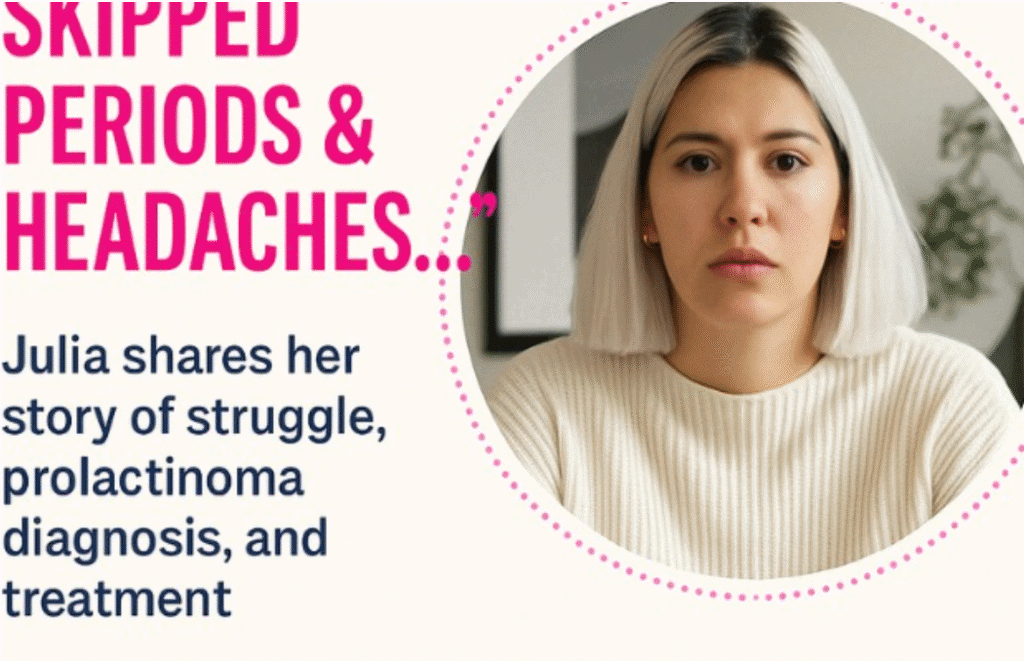
  • Listening to Your Body: How Julia Discovered a Silent Prolactinoma

    Young woman diagnosed with misdiagnosed prolactinoma, looking serious but hopeful

    Misdiagnosed Prolactinoma:

    At 29 years old, Julia thought she understood her body. A busy woman balancing work and family, she blamed her increasing fatigue, persistent acne, irregular periods, and even her forehead headaches on the everyday pressures of modern life. Stress, she thought. Maybe hormones. Nothing that a few months of rest and healthier eating wouldn’t fix.

    Her first gynecological consultation confirmed this belief — superficially. “You have PCOS. It’s common. Birth control pills will regulate everything,” the doctor said after a quick consultation, barely examining her or asking about her symptoms in depth. Feeling reassured, Julia started taking oral contraceptives and waited for her life to normalize.

    But six months later, Julia wasn’t better. She was worse. The acne deepened, facial hair darkened, and worst of all, the headaches grew unbearable. Something inside her kept whispering: “This is not normal.” That internal alarm led her to seek a second opinion — and it saved her life.

    Misdiagnosed Prolactinoma:The Second Opinion – When Someone Finally Listens

    At her next appointment, Julia met a reproductive endocrinologist who took the time to listen. He didn’t rush through questions. He asked about every symptom, no matter how small. When Julia hesitated, mentioning a strange milky discharge from her breasts, he paused, concerned. No one had ever examined her breasts before. She hadn’t thought to mention it — and no one had asked.

    The endocrinologist explained gently that the discharge could be a sign of something more serious. He ordered a full hormonal panel: prolactin, TSH, testosterone, and DHEA-S.

    Misdiagnosed Prolactinoma:The Shocking Lab Results

    Days later, the results came back. Julia’s prolactin levels were alarmingly high — more than 200 ng/mL, when normal values should stay below 20 ng/mL for women not pregnant or breastfeeding. Her TSH and testosterone were within normal range, but the prolactin spike was a red flag.

    High prolactin suggested one probable cause: a prolactinoma — a benign tumor in the pituitary gland.

    Misdiagnosed Prolactinoma: Understanding Prolactinoma

    The pituitary gland, often called the “master gland,” controls many hormones in the body. A prolactinoma disrupts this balance by producing excess prolactin. This leads to a cascade of symptoms: missed periods, infertility, unexpected breast milk production (galactorrhea), acne, weight changes, mood disturbances, and persistent headaches.

    Women like Julia often go undiagnosed because their symptoms are subtle at first or confused with more common disorders like PCOS. But prolactinomas, although benign, can grow, compressing nearby structures and seriously impacting quality of life if untreated.

    Misdiagnosed Prolactinoma: Imaging the Silent Enemy

    Following her blood test results, Julia was referred for an MRI scan focused on her brain and pituitary area. The scan confirmed it: a 1 cm microadenoma nestled quietly against her pituitary gland. A silent disruptor — but a visible one now.

    Misdiagnosed Prolactinoma:The Emotional Weight of a Diagnosis

    Receiving the news wasn’t easy. Julia cried — partly from fear, partly from relief. Fear of having a tumor, even if benign. Relief that she wasn’t imagining her symptoms. Relief that she had finally found an answer — and hope for a real solution.

    Misdiagnosed Prolactinoma:Treatment Without Surgery

    Julia’s endocrinologist recommended starting medical therapy immediately with dopamine agonists — specifically a medication that would inhibit prolactin secretion and help shrink the tumor.

    Unlike many tumors, prolactinomas often respond dramatically well to medications. Within three months, Julia’s prolactin levels dropped significantly. Her headaches faded. The acne lightened. Slowly, her periods returned. And most importantly, her hope returned.

    Misdiagnosed Prolactinoma:The Hidden Dangers of Misdiagnosis

    Had Julia continued only treating “PCOS” with contraceptives, the tumor could have continued growing. Birth control pills mask some symptoms but do not treat the root cause. Worse, if a prolactinoma becomes large enough, it can compress the optic nerves, leading to vision loss. Early detection truly saves futures.

    Misdiagnosed Prolactinoma: Final Reflections

    Julia’s journey is not just about a tumor. It’s about intuition. About trusting that inner voice when doctors or even friends dismiss your concerns. It’s about seeking second opinions when something doesn’t feel right. It’s about refusing to let anyone silence the signs your body is screaming to show you.

    Key Takeaways for Every Woman

    • Persistent unexplained headaches? Investigate beyond stress.
    • Missed periods without pregnancy? Demand hormonal evaluations.
    • Milky breast discharge when not breastfeeding? Seek immediate medical attention.
    • Facial hair, acne, emotional swings? Consider full endocrine workup, not just superficial treatment.
    • Never settle for incomplete answers. Trust your instincts. Your health deserves thorough care.

    Julia’s Message

    “If you feel unheard, keep speaking. If you feel ignored, keep searching. My tumor was silent — but my body was not. I’m here today, stronger than ever, because I refused to ignore the whispers before they turned into screams.”

    References

    ▶️ Listen to Julia’s Full Story on VitaFemme Podcast